Ever had a “long-life” LED fixture fail years ahead of schedule? You’re not alone. You specify a product rated for 50,000 hours (L70), only to get a frustrating callback about flickering, color-shifting, or dead fixtures just a few years later. The culprit isn’t usually the LED chip itself; it’s a silent killer: heat. Without superior thermal management, even the most advanced fixture is destined for premature failure, costing you time, money, and client trust.
Why Effective Thermal Management is Crucial for LED Performance
An LED fixture is a system of heat-sensitive electronic components. If the heat they generate is not effectively removed, a cascade of failures begins.
The Common Causes of Premature LED Failure
- Accelerated Lumen Depreciation: Heat is the primary driver of lumen decay. An LED operating 10°C above its maximum rated temperature can see its useful life cut in half. This is documented in IES LM-80 and TM-21 reports, which we use to project long-term performance.
- Unstable Color Shift: Excessive heat degrades the phosphors responsible for light quality, causing a permanent color shift (Δu’v’) far exceeding the 3-step MacAdam ellipse (SDCM) tolerance for consistency.
- Catastrophic Driver Failure: The electronic driver’s capacitors are its weakest link. For every 10°C increase above their rated temperature, their lifespan is typically halved, making thermal stress the #1 cause of driver failure.
Anova’s Engineering Advantage: A Data-Driven Approach
A fixture is only as reliable as its ability to dissipate heat. Anova Lighting’s approach is built on a foundation of verifiable data and engineering best practices.
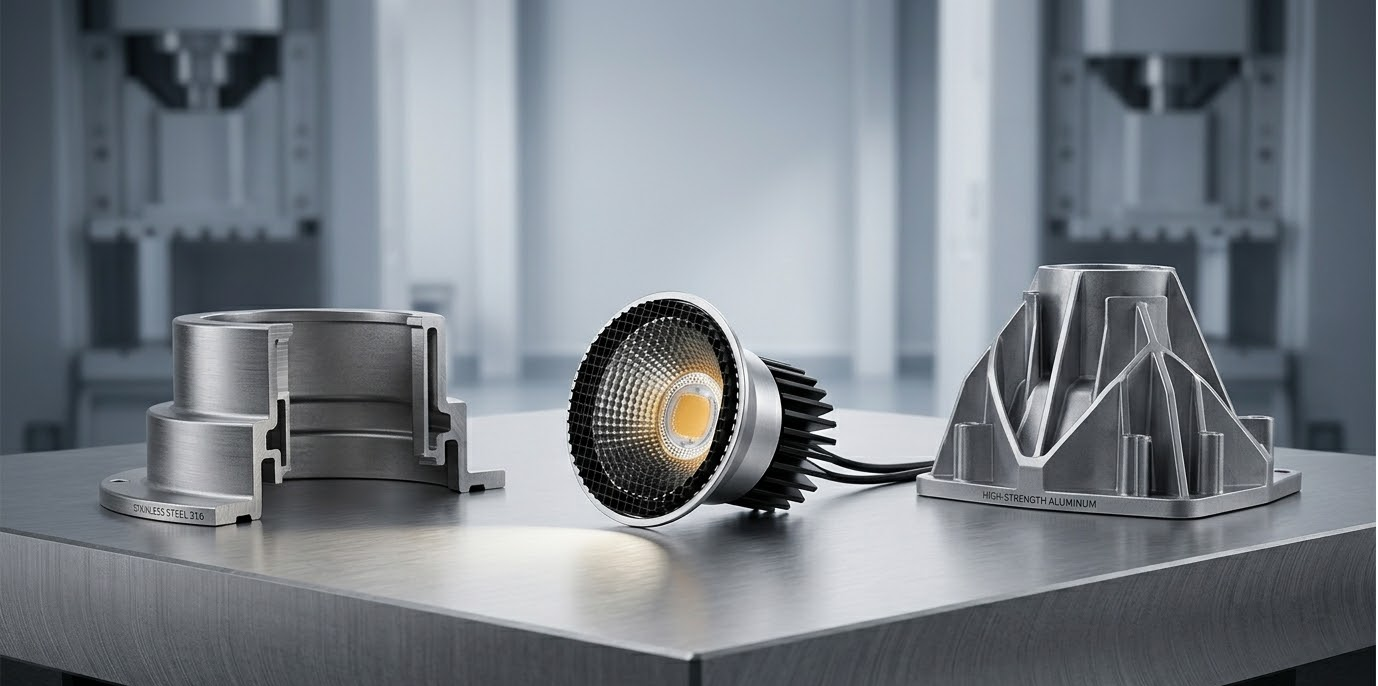
This engineering philosophy is the foundation of our entire high-performance portfolio. Prime examples are our high-efficiency MR16 modules, including the 10W CB5070GL and the 12W CB5080GL. The table below breaks down exactly how the specific engineering features of these modules deliver tangible benefits for your projects.

| Function | Advantage(fortheProfessional) | QuantifiableBenefit |
| Precision-Engineered Die-Cast Aluminum Heat Sink | Lower thermal resistance path (Rth) from the LED junction (Tj) to the ambient air (Ta). | Maintains a lower case temperature (Tc), enabling the fixture to meet or exceed its L70 rating of >50,000 hours as per TM-21 projections. |
| Integrated Fins to Maximize Surface Area | Enhances convective cooling, efficiently transferring heat to the surrounding air. | Ensures stable performance even at the upper limits of the fixture’s rated ambient operating temperature (e.g., Ta = -20°C to 45°C). |
| In-House Lab Validation | Every design is subject to rigorous thermal testing in our lab to verify real-world performance. | Provides confidence in specifications. We can supply thermal data showing Tc point measurements well below the maximum limit under load. |
Key Thermal Parameters & Installation Factors
Specifying a durable fixture requires looking beyond the datasheet. Here are the critical factors you must consider.
Crucial Thermal Specifications
When specifying our products, you will find these key parameters defined:
- Tc Point (Case Temperature Point): A specific location marked on the fixture’s heat sink. Measuring the temperature at this point during operation is the industry-standard method for verifying if the LED is operating within its warrantied temperature limits.
- Maximum Rated Tc: The highest temperature the Tc point can reach while still ensuring the fixture’s long-term reliability and warranty coverage.
- Rated Ambient Temperature (Ta): The range of room/environmental temperatures in which the fixture is designed to operate safely (e.g., -20°C to 45°C).
Installation Best Practices Checklist
Improper installation can negate even the best thermal design.
- Verify IC Rating: For installations with direct contact with insulation, you must use an IC-rated fixture to prevent a hazardous buildup of heat. Non-IC fixtures require a specified clearance.
- Ensure Adequate Airflow: Do not install fixtures in fully sealed, unventilated enclosures unless they are specifically rated for such use. Restricted airflow will cause the Ta to rise, leading to overheating.
- Respect Plenum Height: Ensure the minimum installation height (plenum clearance) is met to allow for proper air circulation around the fixture and driver.
- Remote Driver Placement: If using a remote driver, place it in a location that allows for adequate ventilation and does not exceed its rated Ta.
A Commitment to Verified Performance
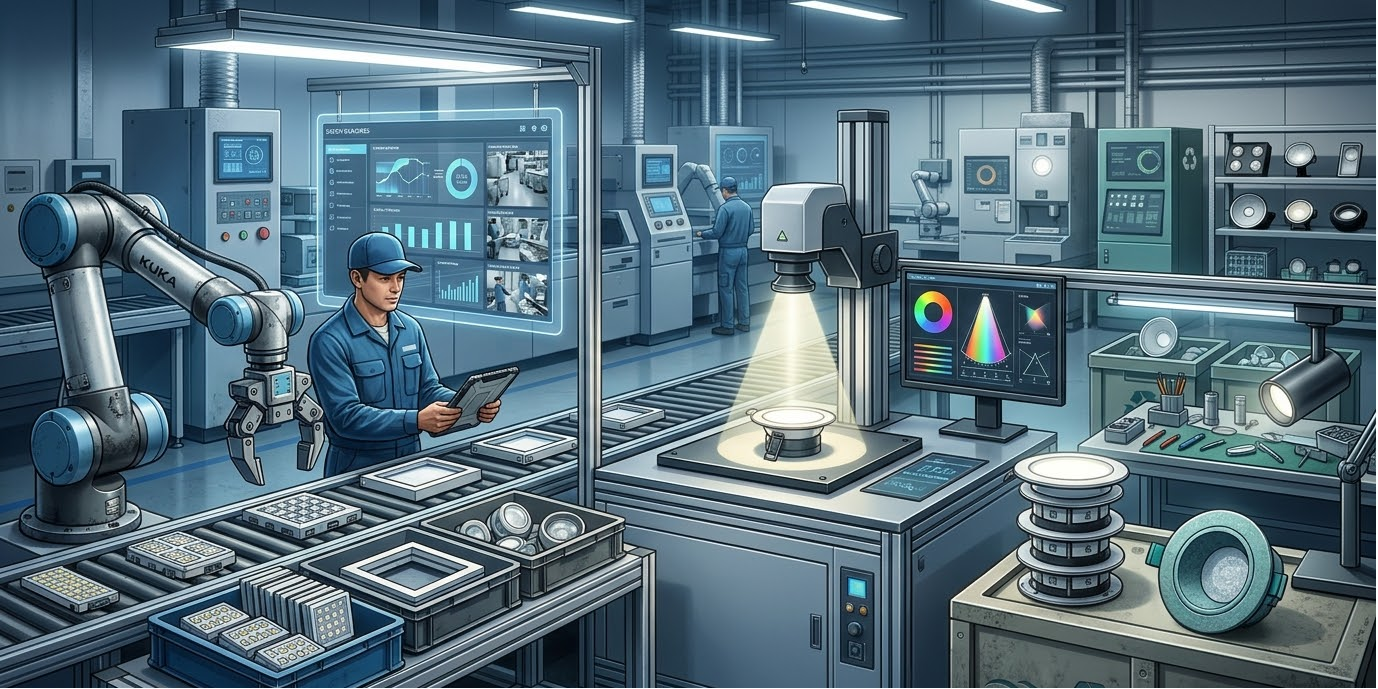
Verifying performance with data is what sets a professional-grade product apart. We have invested heavily in our own in-house Lighting Lab, where we conduct rigorous thermal, photometric, and electrical testing. This ensures that every product leaving our ISO 9001:2015 certified factory is proven to perform reliably under real-world conditions.
Tender Specification Clause (Copy & Paste)
To ensure thermal performance in your next project, include the following clause in your specification documents:
“All LED fixtures must be supplied with: 1) IES LM-80 and IES TM-21 reports demonstrating an L70 lifetime of ≥50,000 hours at the highest rated drive current. 2) A clearly marked Tc point on the fixture body. 3) A stated maximum allowable Tc temperature for full warranty validation. 4) A minimum 5-year warranty that is valid for operation within the specified Ta range.”
FAQs:
Q1: Does a better heat sink really make a difference in LED lifespan?
A: Absolutely. An effective heat sink is the single most critical factor in achieving the rated L70 lifespan. By keeping the LED’s Tc point below the maximum limit, it directly prevents the thermal damage that causes premature failure, turning a 15,000-hour problem into a 50,000+ hour solution.
Q2: What makes die-cast aluminum a good material for LED heat sinks?
A: Die-cast aluminum offers a superior combination of thermal conductivity and design flexibility. It is highly effective at transferring heat, and the die-casting process allows us to create complex, optimized shapes—like the integrated fins on our MR16 modules—that maximize surface area for cooling in a way that is impossible with simpler, extruded aluminum.
Q3: Besides heat dissipation, what else should I look for in a reliable commercial LED fixture?
A: For a truly reliable commercial fixture, demand a full technical specification sheet that includes:
- Light Quality Metrics: CRI ≥90, R9 >50, and SDCM ≤3.
- Safety & Performance Certifications: CE, RoHS, and, where applicable, UL/ETL.
- A 5-year warranty that clearly states the operating conditions (Ta, Tc max) under which it is valid.