In the current context of global architectural lighting, the definition of luxury has changed fundamentally. It is no longer based on the amount of flux emitted, nor on the opulence of the external design of the lighting device itself. In the current luxury market for homes and commercial properties, the definition of real luxury is based on the concept of visual comfort, the subtle art of illuminating a space while still leaving the source of the light in a non-obtrusive manner.
For professionals in the business of lighting distribution, engineering contracting, and architectural design, the understanding of the management of glare is now a key skill, moving from the status of a basic requirement to a key asset in the current market. The management of glare is now a key discriminator in the presentation of a design portfolio, a door opener in terms of access to high-end specifications, and the basis upon which spaces are designed to convey feelings of serenity, luxury, and perceived quality.
This comprehensive guide explores the key metrics in the definition of visual comfort, with particular emphasis on the concept of Unified Glare Rating, as well as the new definition of luxury in the current market of premium interior design, as exemplified by the Anti-Glare Versatile Magnetic Recessed Spotlight (FD17186H) from Anova’s optical engineering expertise.
Redefining Visual Comfort: The “Dark Light” Philosophy
Consider the ambiance of a high-end private villa, a luxury boutique hotel lobby, or a curated art gallery. The textures of the marble flooring are vivid, the artwork is perfectly accented, and the atmosphere feels welcoming. Yet, when observing the ceiling, it appears quiet, almost dark. There are no blinding hotspots, no intrusive glare. This is the “Dark Light” effect—the hallmark of superior optical design and the ultimate objective of modern premium lighting.
The Physiological Impact of Glare
From a technical perspective, glare is not merely an aesthetic nuisance; it is a source of visual fatigue.
- Discomfort Glare: Resulting from excessive contrast between a bright light source and its background, causing an instinctive aversion response.
- Disability Glare: Caused by the scattering of light within the eye (intraocular scatter), which reduces the contrast of the retinal image and impairs the visibility of details and textures.
In premium interiors, simply meeting the standard UGR<19 (often cited for functional office environments—for a detailed specification guide, see How to Achieve UGR<19 in Office Lighting) is frequently insufficient. Exclusive residential spaces and private clubs demand UGR values of <16 or even <10 to ensure the luminaire serves the architecture rather than competing with it. For an importer or contractor, offering products that achieve this “invisible light” effect is the definitive pathway to entering the luxury market segment.
The Metrics That Matter: Beyond the Datasheet
For lighting wholesalers and importers, reliance on unverified manufacturer claims of “UGR<19” presents a commercial risk. The intrinsic anti-glare capability of a luminaire is determined by complex factors, including the shielding angle, the cut-off design, and the precision of the optical accessories.
At Anova, we prioritize data integrity. We validate these critical metrics through rigorous testing in our advanced Lighting Lab. Utilizing state-of-the-art goniophotometers and integrating spheres, we generate precise IES and LDT files.
- Strategic Advantage for Specification: This verified data facilitates the creation of accurate Dialux simulations, a critical tool for securing project specifications. It empowers you to definitively address architectural concerns—such as potential glare on reflective surfaces or the rendering of textured walls—with confidence grounded in accredited laboratory reports.
The Symbiosis of CRI and Glare
Visual comfort encompasses clarity as much as brightness control, and these two elements are intrinsically linked. A high-glare source washes out contrast and forces the eye to squint or avert, effectively negating the benefits of good color rendering. By successfully suppressing disability glare, the eye can relax and process light naturally.
When this rigorous glare control is combined with a High Color Rendering Index (CRI > 92), the result is a profoundly unified, “high-definition” visual experience. By removing visual noise and revealing the true, vibrant saturation of colors—whether in velvet fabrics, natural wood grains, or culinary presentations—it elevates the perceived value of the built environment and allows the true quality of the space to be appreciated without observer fatigue.
Achieving this delicate balance of rigorous glare control and high color fidelity requires more than standard manufacturing—it demands purposeful, architectural-grade engineering. This brings us to a prime example of such engineering in practice: the FD17186H series.
The Solution: FD17186H Anti-Glare Versatile Magnetic Recessed Spotlight
To address the tri-fold challenges of visual comfort, installation reliability, and environmental responsibility, we engineered the FD17186H. This fixture represents a synthesis of optical precision and practical mechanical design, specifically tailored to resolve pain points across the B2B supply chain.
1. The Magnetic Advantage: Streamlined Customization and Secure Installation

The FD17186H is supplied and installed as a fully assembled, integrated unit to guarantee uncompromising quality and structural integrity right out of the box. However, its internal design utilizes a sophisticated magnetic structure that offers distinct advantages behind the scenes:
- For Importers & Brand Owners: This internal modularity allows Anova to rapidly assemble and fulfill highly customized orders at the factory level. You can seamlessly specify various aesthetic options (such as White or Black reflectors) under a streamlined manufacturing process. This significantly enhances your ability to offer tailored, ready-to-install solutions to your clients without the burden of extended lead times.
2. Optical Precision: The Honeycomb Difference
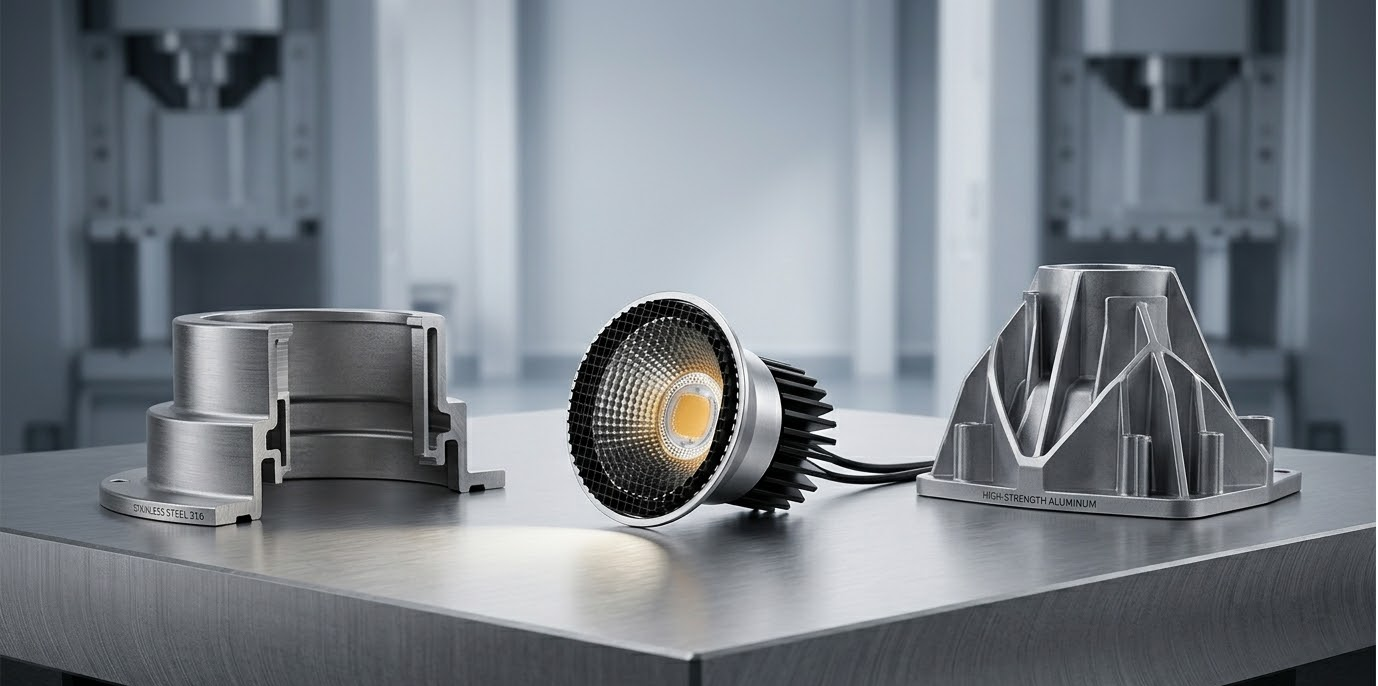
While many downlights claim “anti-glare” properties, the FD17186H delivers a verifiable “quiet ceiling” effect through its honeycomb filter and specialized optical structure. This hexagonal mesh acts as a physical barrier to peripheral light rays, effectively establishing a rigorous cut-off angle. The result is a soft, pleasant beam (515lm from 7W) that maintains intensity on the target object while virtually eliminating off-axis glare. For lighting designers and specifiers, this translates to unparalleled creative freedom, allowing them to confidently place fixtures exactly where illumination is needed—even directly over seating areas or reflective surfaces—without risking occupant discomfort.
3. Logistic Efficiency with 3CCT Technology

Inventory complexity is a persistent challenge in distribution. The FD17186H addresses this with an integrated 3CCT dip switch (2700K/3000K/3500K).
- Inventory Optimization: Predictive demand planning for specific color temperatures becomes obsolete. Stocking a single SKU covers three distinct design requirements, potentially reducing active inventory by 66%.
- On-Site Agility: Should a client determine that 3000K is too cool for a bedroom post-installation, the contractor can switch to 2700K instantly. This minimizes change order complexities and ensures project timelines remain uninterrupted.
Anova: Your Strategic Partner in Architectural Lighting
At Anova, since our founding in 2003 in Foshan, China, we have transformed from a manufacturing company to a provider of total solutions for the lighting industry. We do not simply produce products but rather serve as a partner to leading international companies in the world, with over 50 national patents and Utility Model Patents to our credit for innovation.
We also recognize that for our import partners and brand owners, reliability is key. Our production methods adhere to ISO 9001:2015 standards. Moreover, our commitment to sustainability is illustrated by our ground-breaking work in ocean-bound plastics and bio-waste materials, thereby supporting our partners in abiding by very stringent ecological guidelines in countries such as Europe and Australia.
From our rigorous Quality Assurance System to our responsive after-sales support (offering solutions within 8 hours), we build relationships based on trust and performance. Whether you require customized ODM designs or ready-to-ship premium fixtures, our infrastructure is designed to support your business growth.
- Explore our history of innovation: Company Milestones
- Learn about our manufacturing capabilities: Factory Tour
Conclusion
The demand for premium interior lighting is shifting decisively toward specific, high-performance metrics. Glare control is no longer a luxury feature; it is a prerequisite for any space claiming high-end status. By integrating fixtures like the FD17186H—which combines UGR control, high CRI, and efficient manufacturing design—you provide your clients with more than illumination; you deliver an elevated spatial experience.
For distributors and contractors, selecting the right product is equally about operational efficiency. The integration of 3CCT technology and highly reliable, integrated fixtures ensures smoother project execution, optimized inventory turnover, and a strengthened reputation for quality.
Ready to upgrade your lighting portfolio with scientifically engineered, aesthetically superior solutions?
[Request the Full Specification Sheet and IES Files]
[Apply for a Sample of the FD17186H for Your Next Project]
FAQ
Q: If the FD17186H is installed as a fully integrated unit, what is the benefit of its magnetic design?
A: While the fixture is sold and installed as a complete, sturdy unit to ensure maximum quality on-site, the internal magnetic architecture is a major advantage for our B2B partners. It allows our factory to swiftly assemble customized configurations (like swapping reflector colors) during production. This means distributors get tailored, ready-to-install products with significantly shorter manufacturing lead times.
Q: Why is the 3CCT feature seen as a financial advantage for distributors?
A: Consolidating three distinct color temperatures (2700K, 3000K, and 3500K) into a single SKU directly reduces the capital tied up in inventory. It minimizes the risk of obsolete stock and frees up warehouse space, ultimately improving profit margins for distributors while still offering maximum flexibility to the end-user.
Q: What makes the FD17186H particularly well-suited for high-end residential spaces?
A: Luxury homes require illumination that enhances the decor without drawing attention to the light source itself. The FD17186H combines a “Dark Light” honeycomb structure for near-invisible glare control with a high Color Rendering Index (CRI > 92). This ensures that architectural features, premium finishes, and rich textures are highlighted naturally and comfortably, without causing visual fatigue.