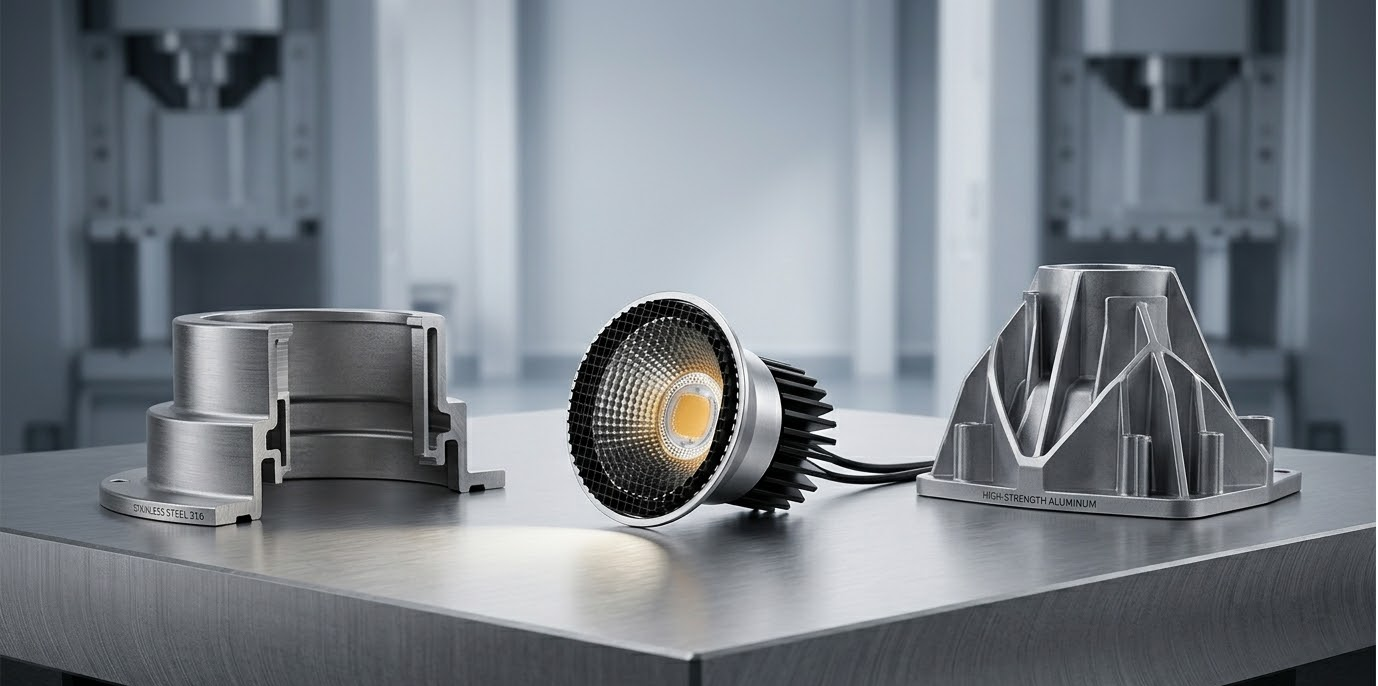
In the exacting discipline of high-specification architectural design, the ceiling has transcended its functional origins to become a canvas of absolute visual silence. This “quiet ceiling” aesthetic—now a non-negotiable standard in ultra-luxury residential and avant-garde commercial commissions—demands that the mechanics of illumination be totally subsumed by the architecture itself. The goal is phenomenological: light should be experienced as a presence, not seen as a fixture. Yet, realizing this seamless visuality often forces a brutal compromise upon the engineering team: typically, one must choose between the aesthetic purity of a plaster-in fixture and the long-term serviceability of the lighting system. Traditional integrated fixtures act as monolithic obstacles; when they fail, they often necessitate invasive extraction that destroys the very finish they were meant to enhance. The industry requires a resolution to this impasse that does not rely on incremental tweaks to obsolete integrated designs, but rather on a fundamental structural shift: the strategic adoption of modular design. By severing the mechanical and thermal bond between the light engine and its housing, Anova allows professionals to engineer the “invisible” aesthetic with surgical precision, transforming the ceiling from a utility plane into an uninterrupted field of light.
The Strategic Advantage of Modular Lighting Systems

The migration toward modular architecture is not merely a trend in product design; it represents a defensive strategy for the supply chain itself. For distributors and facility managers, the modular system functions less like a catalog product and more like a tool for capital optimization. The core concept is the physical bifurcation of the asset: the high-performance MR16 LED Module operates independently from the versatile Downlight Housing. This separation unlocks a degree of inventory fluidity that the rigid architecture of integrated fixtures effectively prohibits.
Restructuring Inventory Logistics and Capital Efficiency
Consider the logistical liability facing the modern wholesaler. The legacy model of stocking “one-fixture-fits-all” integrated units has become financially toxic in a market defined by fragmentation. To service a typical mixed-use project, a distributor might be forced to hold thousands of distinct SKUs, anticipating every possible combination of beam angle, color temperature, and trim finish. This is a capital-intensive gamble that immobilizes liquidity and consumes expensive warehouse volume with slow-moving stock. Modular architecture dismantles this liability. By stocking a standardized, high-performance core engine—such as our robust 7W MR16 module—alongside a separate, compact array of interchangeable trims (round, square, pin-hole, deep-recessed), the distributor can fulfill highly specific project mandates from a consolidated inventory base. A single module type can be deployed into a bathroom requiring IP65 protection in the morning, and re-allocated to a living room requiring deep glare control in the afternoon, simply by changing the housing chassis. This agility does more than mitigate the risk of dead stock; it accelerates inventory velocity, fundamentally restructuring the cash flow dynamics of the distribution business.
Circular Economy Compliance and Lifecycle Management
As global regulatory frameworks tighten—specifically under mandates like the European Union’s Ecodesign Directive (ErP)—the “disposable fixture” is facing regulatory extinction. Integrated fixtures suffer from a fatal flaw: “whole unit redundancy.” If a single capacitor fails, the entire unit, including the aluminum heat sink and the decorative trim, becomes electronic waste. This is economically and environmentally indefensible. Our modular approach offers a rigorous alignment with circular economy principles by enabling component-level maintenance. When the light source eventually reaches its L70 end of life, the intervention is surgical: only the module is replaced. The housing remains embedded in the ceiling, the plaster work is left untouched, and the material waste is reduced to a fraction of the traditional norm. For developers prioritizing long-term asset sustainability and seeking certifications such as LEED or BREEAM, this capability is not a luxury—it is a requisite specification criterion.
Independent Thermal Management and System Longevity
From a strictly engineering perspective, the decoupling of the engine from the trim facilitates superior thermal dynamics. In integrated fixtures, the trim often restricts heat dissipation. Our modules, however, are engineered with dedicated die-casting aluminum heat sinks that function independently of the trim’s physical constraints. This thermal isolation ensures that the LED junction temperature remains suppressed even in restricted plenum spaces, preventing the phosphor degradation that leads to color shift. For commercial projects where maintenance access is disruptive—such as in high-ceiling lobbies or active retail environments—investing in a system designed for thermal longevity is a critical risk mitigation strategy.
Precision Control with Tunable White Technology

While the housing secures the architectural integration, the qualitative success of the “invisible light” depends entirely on the spectral performance of the engine. Static white light is increasingly viewed as insufficient for spaces that must support human biological needs or adapt to temporal changes in use. To truly master the interior environment, we introduce the 2700-6500K Tunable White 7W MR16 LED Module. This engine is not just a light source; it is an instrument for spectral tuning.
Human-Centric Illumination and Circadian Entrainment
Light is a potent biological signal. The capacity to modulate color temperature from a warm, fire-light 2700K to a crisp, daylight-mimicking 6500K allows the built environment to align with the occupant’s circadian rhythm. In a hospitality context, this control is transformative: a lobby can be energized with short-wavelength-rich light during the morning to stimulate alertness, and then softened to a warm, long-wavelength glow in the evening to trigger melatonin secretion and relaxation. For residential applications, it empowers the homeowner to shift the atmosphere from functional task lighting (4000K-5000K) for culinary work to intimate mood lighting (2700K) for dining. This capability elevates the lighting system from a utility to a health-conscious amenity, adding tangible value to the property.
Technical Specifications for the Professional
Our 7W Tunable White module (Model VB5050TWL) is engineered to meet the quantifiable demands of the professional specification market:
Luminous Efficacy and Density: The module defies its compact Ø50x50mm form factor by delivering a robust luminous flux of 593-665 lumens. It effectively replaces the 50W halogen bulb, consuming merely 7W to achieve equivalent intensity, thus optimizing the power density of the lighting design.
Optical Versatility: Precision optics allow for interchangeable beam angles of 15°, 24°, 36°, and 60°. This versatility permits a single module type to execute multiple roles: a narrow 15° beam can drive dramatic contrast on architectural columns, while a 60° beam provides uniform ambient illumination, ensuring visual consistency across the ceiling plane.
Visual Comfort (UGR): Glare is the enemy of the “quiet ceiling.” Our modules utilize a deep-seated COB LED architecture and are fully compatible with honeycomb louver accessories. When paired with our deep-recessed housings, this configuration achieves a Unified Glare Rating (UGR) of less than 10, ensuring the light source remains imperceptible from normal viewing angles.
Color Fidelity: A high Color Rendering Index (CRI >90) is standard, ensuring that the nuanced textures and finishes of the interior design are rendered with absolute fidelity—a non-negotiable requirement for high-end retail and gallery applications.
Electrical Safety and Stability: The system operates on a 24V DC architecture. This low-voltage approach eliminates shock risks during maintenance and is inherently superior for dimming, enabling flicker-free transitions across the tunable range without the stroboscopic artifacts often found in AC-direct alternatives.
Achieving the “Invisible” Aesthetic: Narrow and Trimless Solutions
The ultimate objective is for the fixture to vanish, leaving only the light. The “Trimless” or “Plaster-in” installation method is the gold standard for this aesthetic, eliminating the visible bezel and merging the aperture with the architecture.
The Art of the Minimalist Aperture
Standard downlights rely on a clumsy white flange to hide the rough cut-out in the ceiling. While functional, this creates visual “noise” that interrupts the plane. Narrow trim and trimless designs remove this distraction. Our modular system allows designers to pair our Tunable White 7W Module with specific deep-recessed or pin-hole housings that push the light source upward into the plenum. This geometry cuts off the viewing angle, ensuring the source is invisible until one is directly underneath it. This is the definition of “Dark Light” technology—a volume filled with illumination, yet void of visible sources.
Customization: Your Vision, Our Engineering
High-end projects often encounter site conditions that defy standard catalogs—a historic restoration requiring a specific aperture, or a custom ceiling curvature. At Anova, we do not treat customization as an anomaly; it is our standard operating procedure. While we offer a comprehensive portfolio of modular housings, our competitive edge lies in our ODM capabilities. If a project demands a unique trimless housing to accommodate our 7W Tunable Module, we invite you to contact us directly. We engineer solutions. Our R&D team can develop custom tooling for narrow-edge or rimless accessories tailored to exact ceiling details, ensuring that the design intent is never compromised by the limitations of an off-the-shelf catalog.
Anova: Your Reliable Global Wholesaler and Manufacturing Partner
Specification is only the first step; execution depends on the partner. Anova is not a novice entity. Rooted in Foshan, Guangdong—China’s renowned “City of Lighting”—we have been a driving force in the sector since 2003.
Decades of Expertise and Innovation
With over twenty years of experience, we have evolved from a manufacturer into a strategic supply chain partner for global brands. Our commitment to innovation is documented in an intellectual property portfolio exceeding 50 national and international patents. We are also pioneers in material sustainability, holding the Recycled Claim Standard (RCS 2.0) certification for our Recycled Ocean Plastic Lighting. This allows you to offer clients products that are not only technically superior but also environmentally restorative, transforming marine waste into premium fixtures.
Quality You Can Trust

Reliability is the currency of B2B relationships. Our manufacturing facilities operate under strict ISO9001:2015 protocols. Every modular component undergoes rigorous testing, including photometric analysis, salt spray testing for corrosion resistance, and thermal durability trials. Our products carry CE, RoHS, SAA, and ErP certifications, ensuring that compliance hurdles are cleared before the product even leaves the factory. We back this quality with an operational promise: our after-sales team is committed to an 8-hour response time. We understand that construction schedules do not wait, and we provide the rapid technical support required to keep projects moving.
Conclusion
The “invisible light” aesthetic is not a fleeting trend; it is the maturation of architectural lighting into a disciplined art form. By mastering the synergy of recessed trimless design and modular fixtures, professionals empower their projects with unprecedented flexibility, sustainability, and visual comfort. The 2700-6500K Tunable White 7W MR16 LED Module is the heart of this system, offering the human-centric adaptability required by the modern built environment. Whether you are an architect detailing a luxury residence or a distributor optimizing capital efficiency, the Anova modular system offers the strategic advantage necessary for success. We invite you to abandon the limitations of the integrated fixture and embrace the logic of modular design.
Ready to elevate your next project with modular precision?
[Contact Anova today to request our latest catalog]
[Explore the complete IES files, or discuss your custom trimless housing requirements with our engineering team. Let’s build the invisible light together.]
FAQs
Q: How does the lifecycle cost analysis (LCCA) of a modular MR16 system compare to integrated LED downlights?
A: When evaluated over a standard 10-year operational horizon, the modular system demonstrates a decisively superior ROI. While the initial acquisition cost may be comparable, the OpEx (Operational Expenditure) for modular systems is drastically lower. Upon the inevitable degradation of the light source, a modular system requires only the replacement of the MR16 engine—a process that is rapid, non-invasive, and materially efficient. In stark contrast, integrated fixtures necessitate total replacement, involving higher material costs, increased skilled labor for extraction and re-wiring, and potential remedial work to the ceiling finish, thereby inflating the total cost of ownership.
Q: Can the 7W Tunable White Module maintain its IP65 integrity in varying thermal conditions?
A: Absolutely. The IP65-rated variant of our 7W Tunable White Module is engineered with advanced sealing materials that maintain elasticity and adhesion across a wide thermal range. This ensures that the ingress protection against dust and low-pressure water jets remains uncompromised even in environments subject to thermal cycling, such as exterior eaves or spa areas. This robust engineering allows for design continuity, permitting the same high-quality lighting engine to be deployed seamlessly from climate-controlled interiors to demanding wet zones.
Q: Regarding custom fabrication, what are the minimum order quantities (MOQs) for ODM trimless housings?
A: Anova prides itself on offering flexible manufacturing solutions tailored to project scale. While specific MOQs for ODM (Original Design Manufacturing) projects depend on the complexity of the tooling and materials required, we are structured to support both boutique high-end residential commissions and large-scale commercial rollouts. We encourage you to contact our engineering team directly with your specific design constraints; we often find that we can adapt existing tooling or develop new solutions that are economically viable even for mid-sized projects, ensuring your vision for a unique trimless aesthetic is realized without prohibitive barriers.