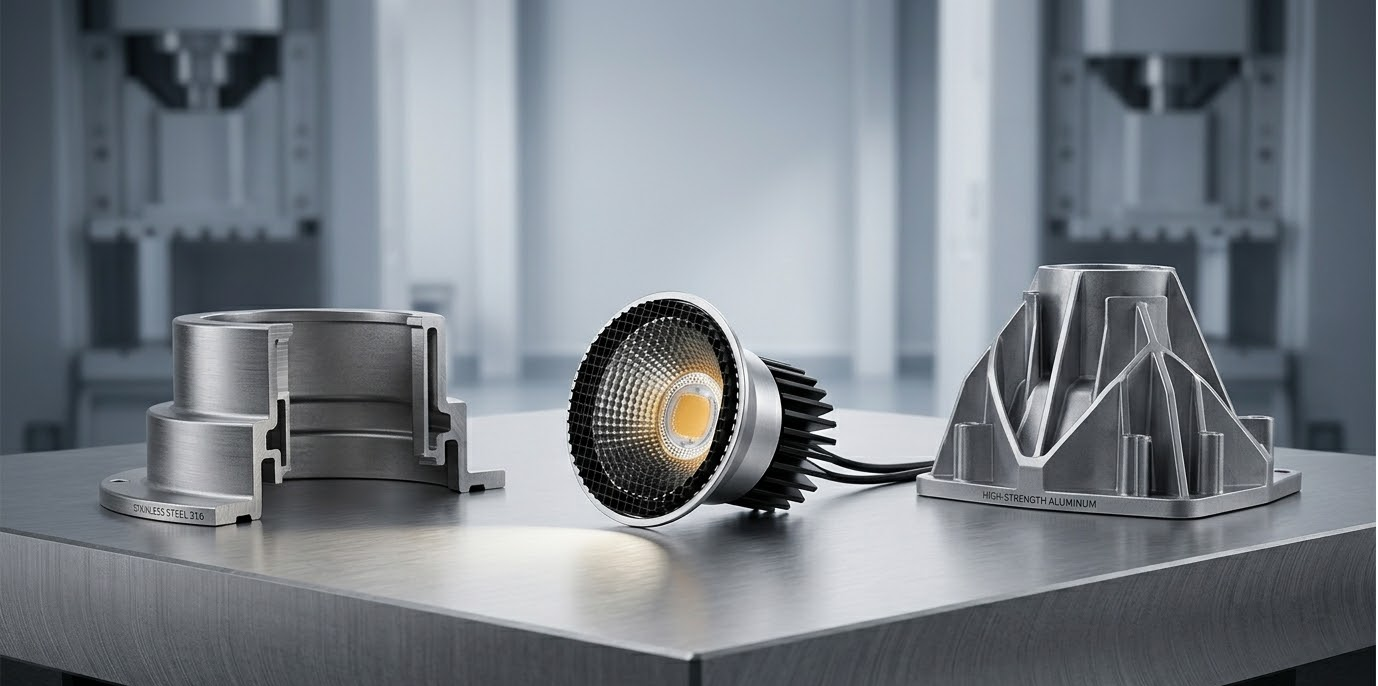
Specifying illumination for massive residential developments necessitates a rigorous balance between operational fluidity and long-term asset resilience. As sustainability mandates tighten and construction timelines accelerate, reliance on static, integrated fixtures frequently precipitates logistical bottlenecks and maintenance liabilities. At Anova, we advocate for a sophisticated alternative: Modular Lighting Systems. By decoupling the light source from the trim, our architectural approach empowers contractors to synergize high-efficiency MR16 LED Modules—engineered for compatibility with solar low-voltage grids and advanced dimming drivers—with our comprehensive array of Downlight Housings. This versatility not only accommodates specific functional requisites, from IP65 waterproofing to UGR<10 visual comfort, but also strictly adheres to ErP eco-design requirements for effortless disassembly and material reclamation at the product’s end-of-life. The following analysis explores how this architectural shift propels profitability and sustainability for contemporary real estate initiatives.
Solving the Complexity of High-Volume Lighting Installations
The Hidden Logistics of Traditional Fixtures
The synchronization of lighting needs in massive apartment complexes with thousands of units is a significant financial problem for project coordinators. Conventional practices are mainly based on integrated lighting in which the light source, heat sink, and trim are packaged in one disposable component. Although initially appearing to be a cost-effective strategy, such components are known to create a chain of inefficiencies; construction deadlines are notorious in their lack of flexibility, such that when a certain component of an integrated system faces a shortage or quality problem, all phases of electrical work stand still, triggering penalty provisions. In addition, due to their inherent inflexibility, integrated lighting systems force procurement officers to lock in design considerations, including color temperature, at an early stage of construction, hence creating tension when there are requests from interested parties or high-end tenants to adjust such designs at a later stage of construction.
The Paradigm Shift Toward Modular Architecture
Today, real estate development is trending from rigid assets to flexible and sustainable ecosystems. Modular lighting systems are a strategic upgrade in the lighting of large-scale residential developments because they separate the light engine, which represents the functional aspect of lighting, from the skin, thus giving developers greater control over the time it takes to complete the installation process, thereby overcoming the ‘install-and-forget’ culture that creates potential future risks.For architectural firms, this signifies that the rough-in phase can proceed with standardized housing frames while final determinations regarding lumen output, beam angles, or color temperatures (CCT) are deferred until the finishing stages, significantly de-risking the construction schedule.
Modular Design: The Strategic Advantage for Apartment Complexes
Inventory Optimization for the Supply Chain

The most compelling financial argument for adopting modular systems lies in the drastic reduction of Stock Keeping Units (SKUs). Wholesalers supplying large-scale projects often struggle with predicting exact demand for every combination of wattage, beam angle, and trim finish, leading to warehousing inefficiencies. With Anova’s Modular Design approach, the inventory equation transforms fundamentally; a singular high-performance LED Module—such as our MR16 or MR11 engine—can be paired with dozens of distinct Downlight Housings. This mix-and-match capability permits distributors to fulfill diverse orders from a lean inventory of core components, meaning on-site contractors can accommodate sudden aesthetic changes without reordering entire fixtures, keeping projects strictly within budget.
Streamlined Maintenance and TCO Reduction
In high-rise apartment management, operational efficiency remains paramount. Traditional integrated LED downlights pose significant maintenance challenges, as failure often necessitates removing the entire unit and damaging the ceiling finish. Anova’s modular systems directly mitigate this by facilitating front-access maintenance, allowing property management teams to replace the MR16 module or driver without disturbing the ceiling structure. This tool-free replacement capability dramatically lowers the Total Cost of Ownership (TCO) over the building’s lifecycle, transforming complex renovations into routine maintenance tasks while ensuring common areas remain impeccably lit.
Future-Proofing Assets with Upgradable Technology
With the rapid advancement of technology in the lighting industry, an installation of combined fixtures immediately puts a building at the technological level of its time of construction. Modular technology provides an upgrade solution in that, when regulations regarding energy become stringent or when tenants require functionalities such as Tunable White (2700K-6500K), one simply replaces the LED module without changing the existing infrastructure in place. This is exactly what ErP eco-design aims at in terms of dismantling and material recovery.
Performance Metrics: Data-Driven Efficiency and Quality
Superior Luminous Efficacy and Compliance

Energy consumption serves as a primary metric for calculating ROI and achieving certifications like LEED or BREEAM. Anova’s modules utilize advanced COB technology to achieve a luminous efficacy of up to 150lm/W, a reality verified in our Lighting Lab. For a complex with 5,000 light points, the differential between standard fixtures and Anova’s high-efficiency modules translates to massive reductions in annual electricity expenditures. Furthermore, support for low-voltage 24V DC input makes these modules inherently safer and compatible with modern solar-powered grids.
Visual Comfort: Quantifying Value with CRI and UGR
High-end tenants anticipate lighting that flatters interior finishes, making light quality a direct influencer of perceived property value. Anova modules prioritize visual fidelity with a Color Rendering Index (CRI) exceeding 90 (Ra>90), ensuring fabrics and finishes appear vibrant. Additionally, visual comfort is governed by glare control; our designs incorporate deep-recessed structures and optional honeycomb louvers to achieve a Unified Glare Rating of less than 10 (UGR<10). This “dark light” effect eliminates eye strain, contributing to a sophisticated atmosphere that distinguishes properties from competitors utilizing standard commercial-grade lighting.
The Anova Modular Solution Ecosystem
The Core: Versatile MR16/MR11 LED Modules
Our ecosystem centers on the LED Engine & Module, offering a comprehensive range of wattages and functional types.
- Adaptability & Optics: Standardized 50mm diameters fit seamlessly into various housings, while interchangeable lenses offer beam angles of 15°, 24°, 36°, and 60°, allowing designers to utilize the same module type for both general and accent lighting.
- Protection: We provide IP65-rated module versions, ensuring the same high-quality light engine functions in high-humidity zones like bathrooms without compromising safety.
- Advanced Control: Our Tunable White modules allow residents to synchronize indoor lighting with circadian rhythms, transitioning from cool, productive light to warm relaxation.
The Shell: Recycled Ocean Plastic Housings
Anova has pioneered the utilization of Recycled Ocean Plastic Lighting housings, sourced from abandoned maritime plastics. These Downlight Housings offer a powerful narrative for eco-conscious developers. Far from fragile, these materials are engineered for high heat resistance and fire safety, including features like 355° rotation and 30° tilting mechanisms to provide the mechanical flexibility needed for precise illumination.
The Control: Reliable LED Drivers
Performance is ultimately dictated by the driver. Anova pairs modules with premium LED Drivers, ensuring flicker-free operation. Compatible with major global protocols (DALI, Triac, 0-10V, Zigbee), these drivers ensure seamless integration with smart home automation. Decoupling the driver allows for independent replacement, reinforcing the modular philosophy of maintainability.
Anova: Your Reliable Wholesale Partner
Manufacturing Excellence and Quality Assurance
Founded in 2003 in Foshan, Anova is a vertically integrated manufacturer holding over 50 national patents, including specific Utility Model Patents optimizing thermal management. Our in-house Lighting Lab operates strictly to ISO9001:2015 standards, subjecting products to grueling salt spray and photometric analysis. This ensures every specification sheet is backed by empirical data, evidenced by our comprehensive portfolio of certifications, including CE, RoHS, and Certifications for recycled materials (RCS 2.0).
Unwavering Service Commitment
We operate as an extension of your team, offering an industry-leading 5-year warranty and guaranteeing an 8-hour response time to inquiries. By partnering with Anova, you secure a supply chain partner dedicated to long-term success. Explore our Factory Tour to witness our precision firsthand.
Conclusion
Adopting a modular lighting strategy constitutes a financial and operational imperative for modern large-scale apartment projects. By amalgamating high-efficiency LED modules with interchangeable, sustainable housings, developers achieve a perfect equilibrium of aesthetic elegance, installation velocity, and long-term maintainability. Anova’s systems provide the requisite flexibility to meet diverse tenant needs while ensuring robust performance and significantly reduced environmental impact through our ocean plastic initiatives.
FAQs
Q: How does modular architecture specifically mitigate inventory risks for wholesalers?
A: Modular design decouples the LED engine from the trim housing, meaning wholesalers need not stock hundreds of fixed combinations (e.g., White Trim/3000K). Instead, stocking a few core module types alongside various inexpensive housings drastically lowers capital tied up in inventory and eliminates “dead stock” risks, as components can be assembled to fulfill specific project orders on demand.
Q: Can Anova’s modular systems integrate with advanced building automation protocols?
A: Yes, our MR16 and MR11 LED modules are engineered for compatibility with a wide spectrum of external drivers, facilitating seamless integration into major smart home ecosystems via protocols such as DALI, 0-10V, Tuya, or Zigbee. This ensures developers can offer future-ready smart lighting features without being tethered to proprietary closed systems.
Q: Do recycled ocean plastic housings meet the durability standards required for commercial projects?
A: Absolutely; our recycled ocean plastic housings are engineered to exceed rigorous industrial standards, possessing high heat resistance, mechanical hardness, and fire-retardant properties. Rigorously tested in our Lighting Lab, they offer longevity comparable to traditional materials while providing a significant sustainability advantage for LEED or BREEAM project scoring.
Ready to Optimize Your Project’s Lighting?
Equip your next development with lighting that economizes costs and elevates design. Download our Full Technical Specifications & IES Files or Request a Sample Kit for Your Next Project to experience the Anova difference.