For any electrical contractor or lighting designer working in the strict markets of Northern Europe, specifically Germany and Denmark, the mandate is never just about illumination. It is about solving a complex puzzle. You are constantly balancing the hard rules of EU regulations against the high aesthetic expectations of modern architects. This presents a complex dichotomy. You need to find products that not only pass the inspection but also look fantastic in a high-end office. This guide is written to help you navigate this regulatory and aesthetic landscape. We will look at how choosing the right anti-glare solutions—specifically our Anti-glare Deep Cup Frames—can make your projects compliant, efficient to install, and visually impressive.
Meeting the Nordic Standard for Visual Comfort
If you have worked on commercial projects in Hamburg or Copenhagen, you know that EN 12464-1 is not just a piece of paper. It is the rule of law for indoor workspaces. This European standard sets the bar very high. For contractors, this means the days of just picking the brightest light for the lowest price are long gone. The challenge now is much harder. You have to deliver the right kind of light.
What does that mean? It means light that allows people to work for eight hours without getting a headache. It means light that doesn’t reflect off computer screens and blinds the workers. It means eliminating “visual noise” from the ceiling so the space feels calm.
We see a lot of standard, flat-faced downlights in the market. Regrettably, many of them fail to meet the strict UGR < 19 (Unified Glare Rating) requirement. This rating is essential for offices, reading rooms, and meeting spaces. If you install a fixture that ignores this, you incur operational risk. Tenants will complain about eye strain. Building managers will call you back to fix it. In the worst case, you might have to rip out the fixtures and start over, which hurts your reputation and your wallet. As a manufacturer deeply involved in the supply chain, Anova understands this pressure. We know that your reputation depends on the quality of the fixtures you install. That is why we focus on the Anti-glare Deep Cup Frame. These aren’t just lights; they are tools that help you meet the “Human Centric Lighting” standards that people in Northern Europe expect.
Beyond Lumens: Why UGR < 19 is Non-Negotiable in Commercial Spaces
Walk into a modern office today, and what do you see? Screens everywhere. Glass walls. Polished tables. In this kind of environment, controlling how light behaves is critical. Glare is not just annoying; it kills productivity. If a worker has to squint to read their screen, they get tired faster. They make mistakes. That is why standards in Germany and Denmark are among the strictest in the world. They prioritize the health of the human being over the brightness of the bulb.
The Science of Visual Comfort and Data-Driven Compliance
In the DACH region (Germany, Austria, Switzerland) and the Nordic countries, data is king. You cannot just say a light is “comfortable”; you have to prove it. The industry standard says that for reading, writing, and training, the UGR value must be below 19. This is a hard limit.
When a light fixture is too bright at certain angles, it creates what we call “discomfort glare.” It distracts the eye. It causes fatigue. For a contractor, the safest bet is to install fixtures that are verified to achieve UGR < 19. For even more sensitive tasks, you might aim for UGR < 16. This is how you future-proof a building. You make sure that no matter who moves in, they won’t have complaints about the lighting.
At Anova, we don’t guess about these numbers. We verify everything. We have our own in-house Lighting Laboratory. We run rigorous tests on every fixture design. We check the photometric distribution to make sure the light goes exactly where it is supposed to go. This means when we give you an IES file for your Dialux simulation, you can trust it. You can show that data to your client with total confidence.
The “Deep Curve” Engineering Advantage

So, how do we solve the glare problem? The answer lies in the engineering of our Anti-glare Deep Cup Frame.
Many cheap fixtures use a simple opal diffuser—a piece of white plastic—to soften the light. This often doesn’t work well enough for strict standards. It scatters light everywhere, including into people’s eyes. Our approach is different. We use physics. We use a specific “deep cup” geometry.
Here is how it works:
- The Cutoff Angle: We push the light source deep up into the housing. Ideally, the light sits recessed significantly back from the ceiling line. This creates a physical shield. The trim of the light blocks the view of the bulb from the side.
- Glare Control: Because of this depth, if you are standing in the office and looking across the room, you don’t see the bright spots on the ceiling. The light source is invisible at normal viewing angles. The light hits the desk, not your eyes.
- Visual Aesthetics: Architects love this. They call it the “quiet ceiling” or “dark light” effect. The ceiling looks clean and uncluttered. It fits perfectly with the minimalist design style that is so popular in German and Danish architecture.
The Modular Architecture: A Contractor’s Strategic Asset
Installation efficiency is not a luxury; it is a cost-control necessity. Labor costs in Germany and Denmark are incredibly high. Every minute your team spends on a ladder costs you euros or kroner. You need fixtures that are fast to install and easy to maintain.
The old way of doing things—using “integrated” downlights where the driver, LED chip, and heatsink are all glued together—is becoming a bad choice for high-end commercial jobs. If one part breaks, you throw the whole thing away. That is wasteful and rigid.
Installation Efficiency and Patent-Backed Innovation
We have a better way. Our Modular Downlight System separates the trim (the Housing) from the light source (the Module). This is a modular approach, and it changes how you manage a project. We have spent years developing this, and we hold Utility Model Patents for our locking mechanisms and heat sinks. These aren’t generic copies; they are engineered solutions.
Think about the workflow on a job site:
- Your team installs the high-quality Anti-glare Deep Cup Frame while the ceiling is being finished. The frame is made of tough die-cast aluminum, so it fits perfectly into the cutout and doesn’t bend or warp.
- The painters come in and finish the ceiling.
- After the paint is dry, you simply snap in the light source. You can use a standard GU10 bulb or, for better performance, our professional MR16 LED Module.
This separation mitigates onsite complications. You don’t have to worry about expensive electronics getting covered in drywall dust or paint. Plus, our frames typically use standard cutout dimensions. You can use standard European hole saws. You don’t need custom tools. This speeds up the rough-in process significantly.
Future-Proof Maintenance and Ecodesign Alignment
Europe is moving towards a circular economy. The EU’s Ecodesign (ErP) rules say products should be repairable. Our modular design fits this perfectly. It gives you a great selling point when talking to building owners who care about sustainability.
Imagine a driver fails three years from now. With an integrated light, you have to rip the fixture out of the ceiling. You might damage the plaster. You might have to repaint. This compromises structural integrity.
With our Anti-glare Deep Cup Frame, maintenance protocols are streamlined. One of the distinct advantages of this series is that the light source is changeable from the front/trim. The technician simply reaches up, accesses the module from the front, and pulls it out. They plug in a new one and snap it back. It takes seconds. No tools required. No damage to the ceiling.
Or imagine a new tenant moves in. They don’t like the warm 3000K light; they want a cooler 4000K light for their design studio. You don’t need to sell them new fixtures. You just swap the modules. This extends the life of the ceiling installation and reduces electronic waste. It is a smart choice for any project aiming for DGNB (German Sustainable Building Council) or LEED certification.
Product Spotlight: Anti-glare Deep Cup Frame
We designed the Anti-glare Deep Cup Frame specifically for the demands of commercial jobs. We focused on three things: the quality of the material, how well it handles heat, and how good it looks.
Built for Performance
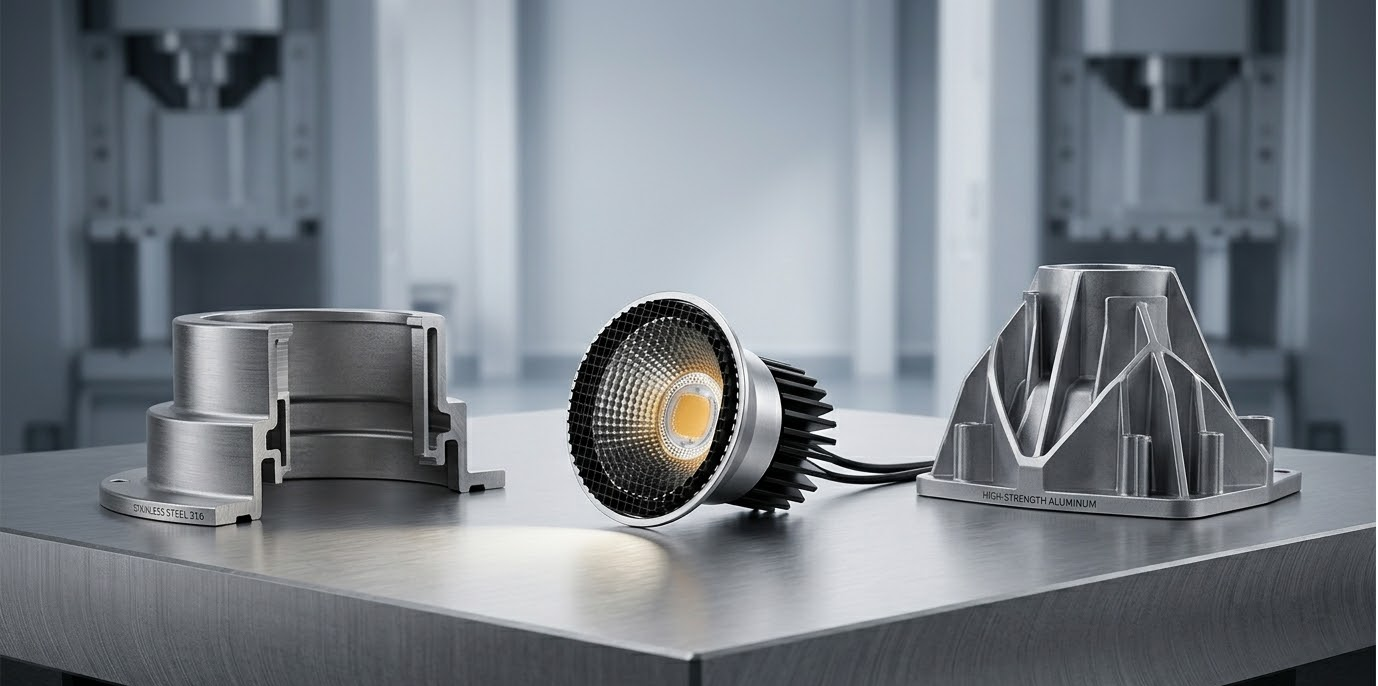
- Material Integrity: We don’t use plastic for our frames. We use high-grade Aluminum. Why aluminum? Because heat is the enemy of LEDs. Aluminum pulls heat away from the light source much faster than plastic or steel. This thermal management keeps the LED module cool, which means it lasts longer and the color doesn’t shift over time.
- Precision Optics: The shape of the recess is carefully calculated. It is designed to stop light from bouncing around and creating glare. For projects that need even more control, these frames can be fitted with honeycomb louvers. This is a grid that sits in front of the light. It cuts the glare down even further, potentially getting the UGR value well below 16. This is perfect for areas where people need extreme focus.
Universal Compatibility for Diverse Projects
For wholesalers, inventory stagnation due to single-application stock is a critical inefficiency. Our Deep Cup Frames resolve this via universal compatibility.
- Light Sources: You can put a simple GU10 or GU5.3 bulb in them for a hallway or a budget area. But for the main office or a lobby with high ceilings, you can snap in our MR16 LED Modules. These modules are powerful (up to 12W) and efficient (150lm/W). You get the same look across the whole building, but you can change the performance engine inside to get the exact beam angle (from 15° to 60°) and IP rating (IP20 or IP65) required for the specific zone.
- Aesthetics: The frames come in matte textured white or black finishes. They are designed to blend in. Whether you are lighting a converted industrial loft in Berlin or a sleek, modern glass office in Copenhagen, these frames fit. They let the light define the space, not the fixture.
Anova: Your Strategic Partner for European Distribution
Anova has been in this business since 2003. We are rooted in Foshan, the “City of Lighting.” For over 20 years, we have been working with professional distributors and project managers all over the world. We are not just a factory; we are a partner that helps your business grow.
Reliability and Supply Chain Excellence

In the B2B world, trust is everything. Our factory is ISO9001:2015 certified, which means we have strict processes in place.
Premium Components: We don’t cut corners on the inside. When we say a light has a certain CRI (Color Rendering Index) or color consistency, we mean it.
Rapid Response: We know that construction sites don’t wait. If you have a question or a problem, you need an answer fast. Our support team guarantees a response within 8 hours. We are here to keep your project moving.
Quality Assurance: We check everything. We inspect the raw materials when they arrive. We check the products while they are being made. We test the finished components. And we do a final test before shipping. This four-step process keeps our defect rate extremely low.
Commitment to Sustainability and Innovation
We believe in looking forward. We invest a lot of money in Research and Development. We hold over 50 national patents. These include Design Patents and Utility Model Patents that cover the unique ways our lights handle heat and how our modular parts lock together.
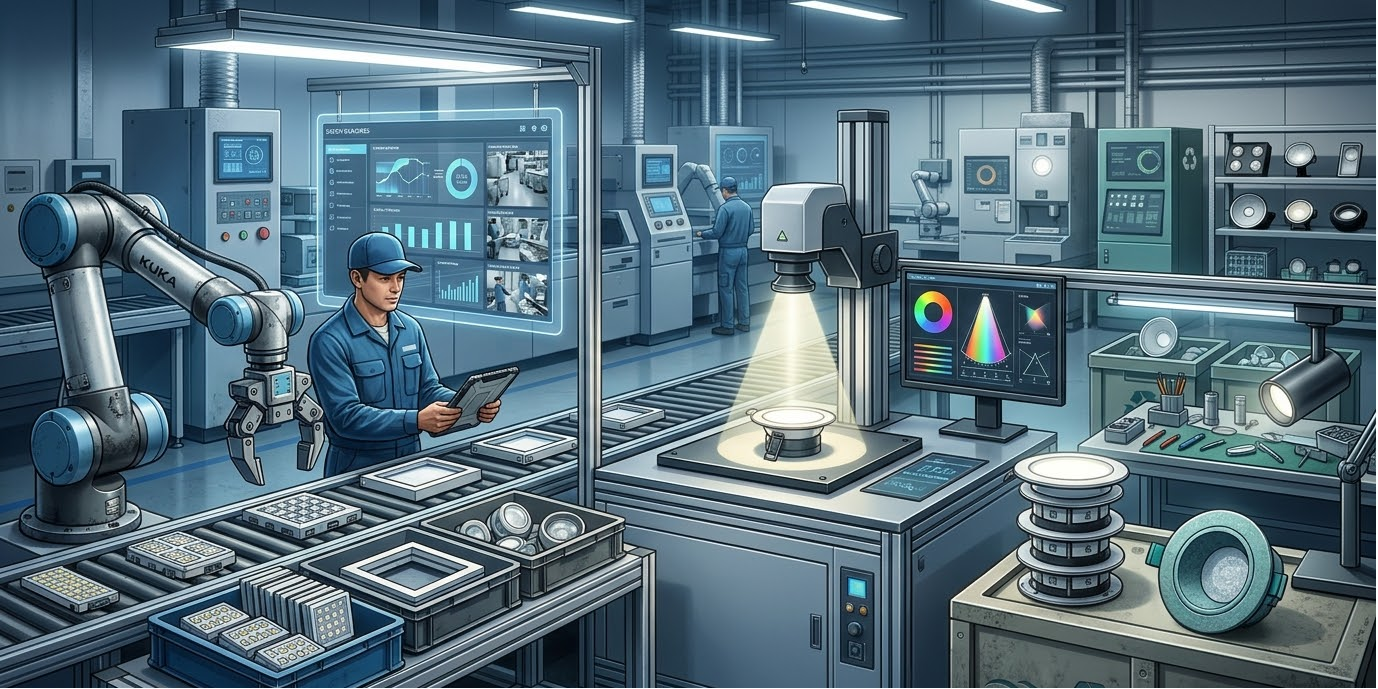
- The Anova Lab: We have our own lab right in the factory. We do photometric testing to map out exactly how the light behaves. We do temperature stress tests to see how the lights handle heat. We do salt spray tests to ensure they won’t rust. This data is real. When you download an IES file from us for your Dialux plan, you can rely on it.
- Sustainability: We are also leading the way in green manufacturing. We are using Recycled Ocean Plastics for some of our housing lines. We have the RCS 2.0 certification to prove it. This is a powerful story you can tell your clients. You are offering them premium lighting that also helps clean up the oceans, without giving up any durability or safety.
Conclusion
Lighting an office in Germany or Denmark is a serious task. You cannot rely on guesswork. You need architectural precision and engineering you can trust. By choosing Anti-glare Deep Cup Frames, you are solving multiple problems at once. You are ensuring compliance with EN 12464-1. You are providing a comfortable visual environment for the people who will work there. And you are making life easier for your maintenance team with a smart, modular design that allows for front-loading light source changes. Partnering with Anova means you get these high standards backed by a transparent supply chain and two decades of manufacturing expertise. We give you the tools to deliver lighting that is functional, responsible, and built to last.
- View the Product: Anti-glare Deep Cup Frame | Aluminum丨Light source changeable from fronttrim
- Get the Data: Explore the Technical Specifications & IES Files
- Start a Project: Request a Sample Kit or Consultation
Contact Anova’s engineering team today to ensure your lighting layout is fully EN 12464-1 compliant.
FAQs
Q: How does the Anti-glare Deep Cup Frame specifically achieve UGR < 19?
A: It comes down to the geometry. The fixture uses a “deep cup” shape that forces the light source to sit recessed back inside the ceiling housing. This depth creates a high “shielding angle.” It physically blocks the light from hitting your eye from the side. By limiting the beam to a controlled angle (usually 60 degrees or less), we make sure that if you are looking across the room, you don’t see the bulb. This keeps the UGR value low, typically below 19.
Q: Are your modular downlights compatible with smart lighting systems like DALI or Zigbee?
A: Yes, they are. The beauty of the modular system is that the “brains” are in the driver and the module, not the metal frame. You can install our Anti-glare Deep Cup Frame and then pair it with our MR16 LED Modules that are connected to DALI, Zigbee, or Casambi drivers. This lets you integrate the lights into a full smart building system for dimming and color tuning, without changing the look of the ceiling.
Q: Can I obtain samples and IES files for a Dialux simulation for a project in Hamburg?
A: Absolutely. We know you need to test things before you buy. We fully support your planning process. You can download complete IES files directly from our technical portal to use in your software. If you need physical samples to show a client or test the fit, just contact our team. We offer fast shipping to Germany and Denmark so you can get the products in your hands for mock-ups and approvals.