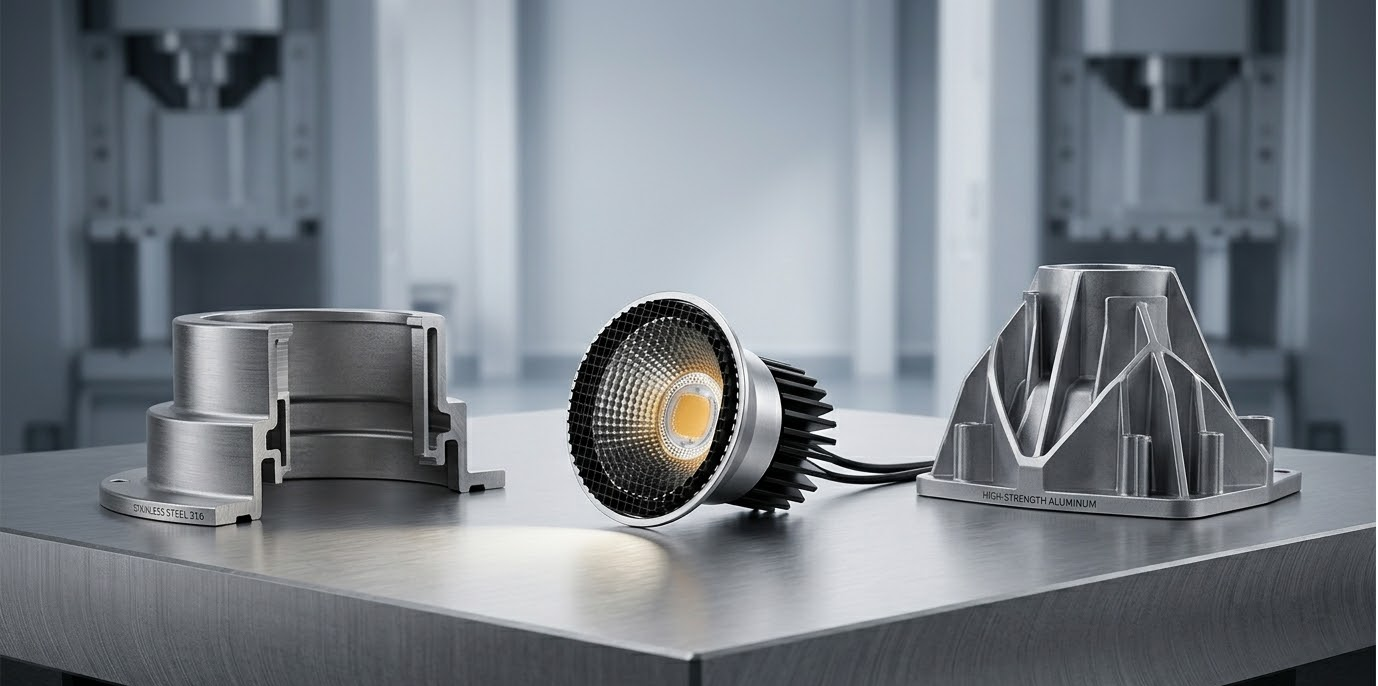
In high-end specification, the paramount goal is reconciling potent illumination with an unblemished ceiling plane. This drive toward architectural reductionism has elevated the 35mm MR11 from a niche component to a primary detailing instrument. Advanced MR11 LED Modules now deliver the luminous intensity required to replace intrusive 50mm fixtures, empowering specifiers to engineer “quiet ceilings” that offer substantial visual impact without the associated visual noise.
Mastering the Scale: Why 35mm Modules Are Critical for Precision
The initial migration to solid-state lighting prioritized replicating the ubiquitous MR16 output; however, as luminous efficacy has undergone exponential refinement, the industry has reached a critical inflection point where the diminutive MR11 can legitimately challenge its larger predecessors. The crux of this evolution is the 7W MR11 LED Module, defined by its extraordinary lumen density.
Historically, the specification of an MR11 entailed a difficult compromise wherein professionals secured a reduced aperture only by sacrificing luminosity, typically constrained to 20W halogen equivalents generating a meager 200 to 300 lumens. This limitation relegated the format to cabinet interiors or elevator displays. Conversely, Anova‘s contemporary engineering capabilities facilitate the integration of a robust 7W LED engine within this minuscule 35mm footprint, delivering brightness levels comparable to a 35W halogen lamp but with significantly superior energy efficiency. This breakthrough implies that designers can maintain a consistent 35mm aesthetic throughout a project without inadvertently creating dark spots in larger volumetric spaces, effectively liberating the designer from the tyranny of the 50mm standard.
Precision Optics and the Necessity of High CRI
In compact lighting solutions, beam control is paramount because when the light source is physically small, any uncontrolled spill light manifests immediately as uncomfortable glare. High-performance MR11 modules utilize sophisticated optical engineering to strictly govern the beam angle, ensuring that whether the requirement is for a tight 15° spot to accentuate a sculpture or a broader flood for circulation, the lumens are directed exactly where intended.
Furthermore, in hospitality environments, the quantity of light is rendered meaningless without corresponding quality. A Color Rendering Index (CRI) of 90+ has become the baseline expectation for high-end environments. When the objective is to illuminate a velvet armchair in a boutique hotel lobby or intricate marble veining in a bespoke kitchen, superior color fidelity is essential. Utilizing a light source with a lower CRI would cause these expensive materials to appear flat, effectively devaluing the interior design investment. Our modules prioritize spectral quality, ensuring vibrant tones that contribute directly to the perceived luxury of the space.
Strategic Applications: Beyond the Cabinet
While MR11 modules have traditionally been pigeonholed into joinery lighting, their increased power output has unlocked a plethora of new strategic applications for contractors seeking to differentiate their offerings.
Residential: The Art of the Discreet Niche
In modern residential layouts, “no-main-light” design philosophies are gaining substantial traction. Here, the 7W MR11 LED Module excels as a focused task light. Consider a kitchen niche or coffee station: a standard 50mm downlight would visually overpower such a confined space and necessitate a disproportionately large cutout. A 35mm MR11, however, tucks neatly into the soffit, providing ample working illumination without the accompanying visual bulk. Similarly, in bedroom applications, these modules serve as ultra-discreet reading lights; integrated into the headboard, they offer sufficient illumination without flooding the entire room, thereby preserving the restful atmosphere essential for sleep hygiene. The fixture effectively vanishes, leaving only the experience of the light itself.
Hospitality: The “Quiet Ceiling” Effect
Hotel corridors present a unique challenge in that they must be operational twenty-four hours a day and maintain safe lux levels, yet feel welcoming rather than clinical. The utilization of large downlights often results in a ceiling plane riddled with large apertures, creating what designers refer to as the “swiss cheese” effect.
By transitioning to high-output MR11 modules, designers can achieve the “quiet ceiling” effect. The smaller 35mm aperture is far less obtrusive to peripheral vision; one perceives pools of light on the carpet and rhythmic scalloping on the walls, while the ceiling itself remains calm. Furthermore, for facility managers, the energy efficiency inherent in replacing 35W halogens with 7W LEDs translates into massive operational savings over the lifespan of the hotel, eliminating the maintenance headache associated with frequent bulb replacements.
The Solution: Anova’s 7W MR11 LED Module

To resolutely address these demanding applications, Anova has engineered the 7W MR11 LED Module, a solution developed specifically for professionals who refuse to negotiate between physical reduction and luminous power.
Die-Casting Aluminum: The Key to Longevity
Injecting 7 Watts of power into a compact 35mm housing creates a significant thermal challenge. Heat accumulation is the primary adversary of LED longevity; insufficient dissipation inevitably leads to rapid lumen depreciation and premature color shifting. Unlike plastic or stamped-metal alternatives, Anova’s module features a robust die-casting aluminum body. This material selection is deliberate, acting as a superior heat sink that rapidly conducts thermal energy away from the critical LED chip and driver components. This construction ensures the module maintains high performance metrics over thousands of hours of operation, even in enclosed plenum spaces where airflow is negligible.
The Modular Advantage
Integrated fixtures, where the LED source is permanently fixed to the trim, represent a maintenance nightmare. Should the light source fail, the entire fixture must often be extracted, potentially damaging expensive gypsum ceilings. Anova advocates for a modular approach, wherein our MR11 module fits seamlessly into compatible downlight housings. This separation offers two critical benefits:
- Ease of Maintenance: If a driver fails or a client desires to alter the color temperature, the module can be removed from the front without disturbing the ceiling structure.
- Future-Proofing: Clients retain the option to upgrade the engine while preserving the original high-end trims, aligning with modern eco-design principles to reduce waste.
Anova: Your Strategic Partner in Manufacturing
Selecting a lighting supplier necessitates establishing trust and ensuring supply chain stability. Anova is not simply an assembly plant; we are a comprehensive lighting solutions provider established in 2003 in Foshan.
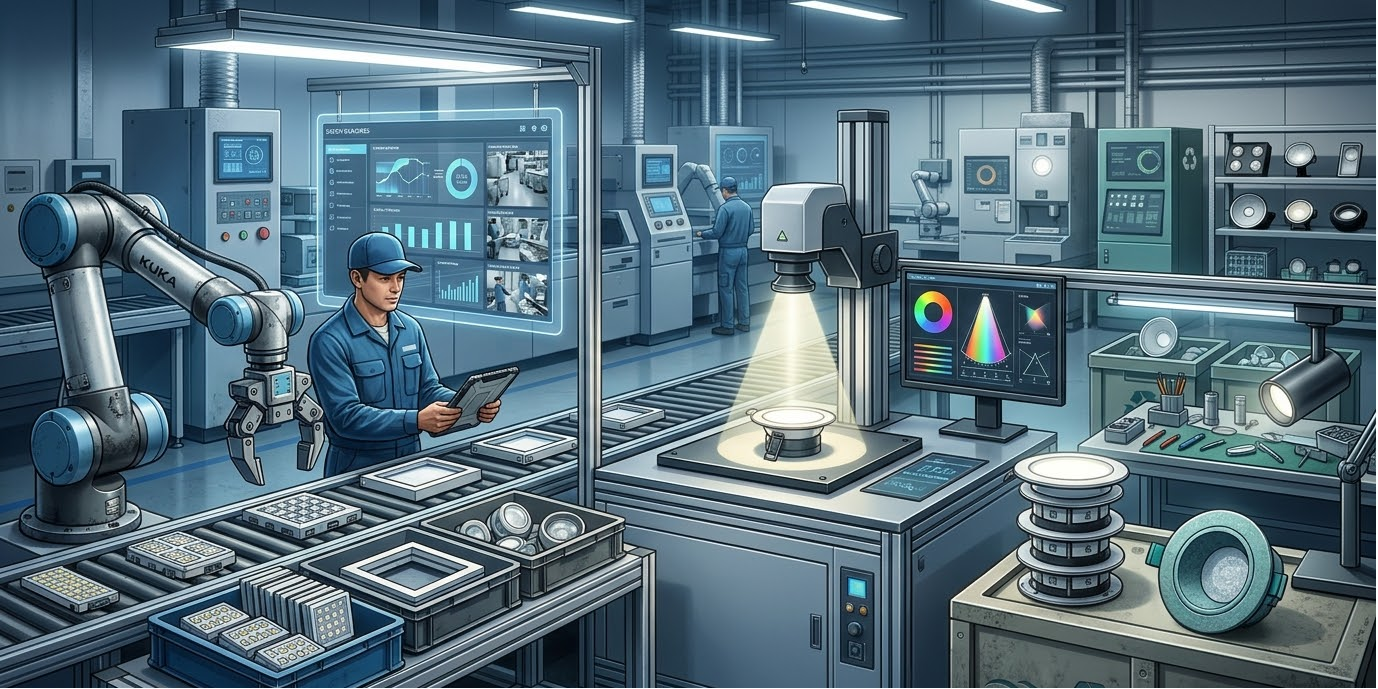
We distinguish ourselves through the capabilities of our internal Lighting Lab. Every product undergoes rigorous testing protocols, including photometric analysis to verify beam accuracy, thermal profiling to ensure heat dissipation standards, and salt spray testing to confirm corrosion resistance. This commitment to data-driven quality has earned us over 50 national patents. Beyond efficiency, we have pioneered the utilization of recycled ocean plastics in select housing lines, demonstrating that industrial strength and environmental stewardship can coexist. Our facilities are ISO9001:2015 certified, and our products meet rigorous global compliance standards (CE, RoHS, SAA), ensuring that when you import Anova products, you are importing peace of mind.
Conclusion
The era of choosing between a minimalist aesthetic and functional brightness has definitively concluded. Small spaces do not require sacrificing light quality. By utilizing high-performance tools like the Anova 7W MR11 LED Module, architects and designers can achieve sophisticated, clutter-free interiors with the intensity and precision required for luxury environments. We invite you to experience the difference that precision engineering makes.
Ready to Define Your Next Masterpiece?
Don’t let bulky hardware compromise your architectural vision. Equip your projects with the precision and power of the Anova 7W MR11 LED Module.
[Ask for the Full Technical Specifications & IES Files]
[Request a Sample for Your Upcoming Project]
FAQ
Q: Can a diminutive 7W MR11 unit genuinely supersede the output of a legacy 35W halogen lamp?
A: Photometric data unequivocally validates this capability. The Anova 7W module generates a luminous flux that eclipses conventional 35W halogens while reducing energy consumption by over 80%, rendering it a thermodynamically superior choice for spatially constrained installations.
Q: How does the die-cast aluminum chassis enhance operational longevity?
A: Given the thermal constraints of the 35mm form factor, our proprietary die-cast aluminum chassis acts as an exceptional thermal conductor. By dissipating heat far more effectively than plastic substitutes, it is indispensable for maintaining consistent luminosity and chromatic fidelity throughout the product’s lifespan.
Q: Is the module compatible with diverse dimming protocols used in hospitality?
A: Our modules are engineered for broad compatibility with commercial drivers; however, to guarantee flawless integration with architectural control ecosystems like Triac, 0-10V, or DALI, we emphatically recommend consulting specific driver technical specifications to preempt compatibility variances.