Lighting is evolving from a simple utility into a verified component of cognitive performance, wellness, and building compliance. As schools adopt healthier learning environments and offices shift toward productivity-focused design, the technical expectations for luminaires have tightened significantly.
For contractors and engineers, this shift reshapes project requirements. Installers now face increasing pressure to deliver lighting that is flicker-free, low-blue-light, UGR-controlled, and compatible with smart systems—while also minimizing installation risks and lifetime maintenance costs.
The 2025 landscape brings one clear message:
Healthy lighting is no longer optional—it is a performance and compliance baseline.
1. The Hidden Risks in Today’s School & Office Lighting
In both education and corporate environments, lighting-related complaints continue to rise:
Students struggle with visual fatigue and slower reading speeds
Employees report afternoon “productivity dips”
Facility managers issue repeated service calls for flicker during dimming, driver noise, and glare discomfort
Human-centric lighting intelligence from your VOC reports confirms these problems. Lighting designers emphasize that although stakeholders appreciate better lighting, many still struggle to justify its cost without quantifiable benefits.
However, science is clear:
Blue-light overload disrupts comfort and visual processing
Flicker reduces attention span, worsens headaches, and triggers complaints
Glare (UGR > 19) causes squinting, eye strain, and reduced task accuracy
For contractors, these issues often lead to the most expensive part of the project—call-backs. A cheap driver may save $3 upfront but can cost 10× more in troubleshooting and reinstallation time.
2. What 2025 Lighting Standards Expect
2.1 WELL & Education-Based Lighting Expectations
The WELL Building Standard and global educational lighting guidelines prioritize measurable wellness outcomes, including:
Blue-light management (melanopic ratios suitable for long-duration tasks)
Flicker-free operation (<8%) under all dimming conditions
UGR < 19 for reading, writing, and screen-based activities
CRI ≥ 90 for accurate color interpretation and visual clarity
Schools and offices increasingly use these benchmarks to evaluate project proposals and approve contractor selections.
2.2 Why Standards Matter to Contractors
Because these specifications directly correlate with:
Tender scoring
Warranty acceptance
Energy and maintenance contracts
Long-term owner satisfaction
If lighting fails to meet performance expectations, contractors—not manufacturers—bear the troubleshooting burden.
3. Why Lighting Fails in Real-World Installations
3.1 Flicker from Low-Quality or Incompatible Drivers
Your downlight system reports identify flicker as a top failure point, especially when:
Drivers interact poorly with DALI, Zigbee, or 0–10V dimmers
Daisy-chain wiring introduces voltage fluctuation
Smart controls respond inconsistently across multiple fixtures
Contractors often spend hours diagnosing a single flicker point—an avoidable cost with better driver-paired systems.
3.2 Glare and Low Visual Comfort in Learning Environments
In classrooms and offices, poor optical control leads to visual discomfort and lower reading efficiency. With downlights placed close to desks or whiteboards, UGR < 19 becomes essential—not just a design preference.
3.3 Blue-Light Overexposure Slows Cognitive Performance
Human-centric test data shows that controlled-spectrum lighting reduces afternoon drop-offs in focus and improves visual comfort.
3.4 Designers Struggle to Justify Healthy Lighting Without Quantifiable ROI
Uploaded VOC notes show owners frequently ask:
“Will this improve learning outcomes or productivity—how can we measure it?”
This is why WELL criteria, spectrum reports, and CRI/UGR data become critical in tender documents.
4. A Technical Roadmap: Low-Blue-Light & Flicker-Free Lighting Engines
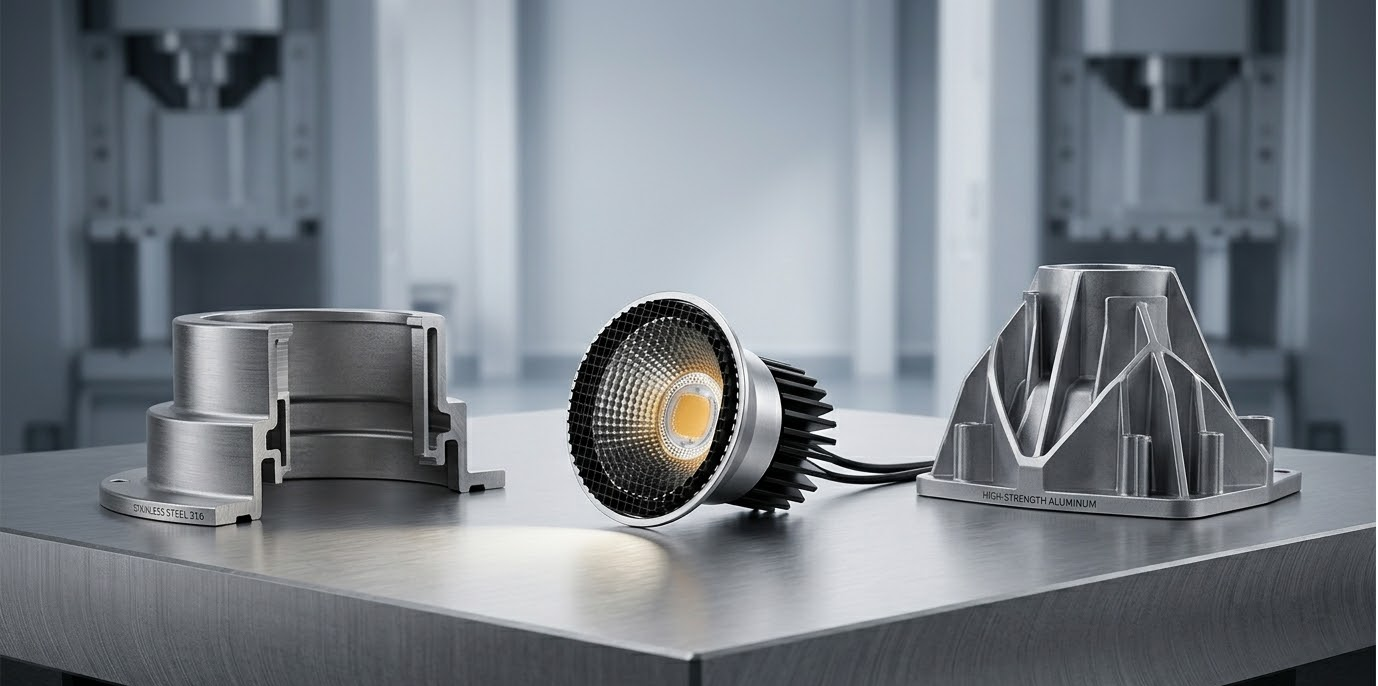
To meet 2025 requirements, contractors increasingly rely on MR16 modular lighting engines paired with optimized optical housings. This architecture simplifies installation, ensures long-term stability, and supports future upgrades.
High-Performance Modular MR16 LED Engine (Anova)

Anova’s modular system features swappable modules with CRI 90+ stability and flicker-free performance, compatible with both IP20 and IP65 applications. This versatile architecture means one light engine supports multiple beam angles and housings, allowing distributors to reduce inventory and contractors to speed up replacement cycles.
Anti-Glare Downlight Housings (UGR < 19)
Designed with a deep-recessed optical structure, these housings are engineered specifically for school corridors, classrooms, and meeting rooms. They ensure full compliance with educational standards while significantly increasing visual comfort for students and staff.
Sustainable OBP (Ocean-Bound Plastic) Options
For projects prioritizing sustainability, Anova offers housings made from recycled Ocean-Bound Plastic. These components provide stable mechanical properties compatible with MR16 frames, directly supporting ESG procurement goals for public-sector school projects.
Seamless Driver & Control Compatibility
Stable driver pairing is critical to preventing flicker on dimming and non-linear output. By ensuring compatibility with modern lighting controls, these engines minimize the risk of return visits and ensure smooth commissioning.
5. Why Contractors Prefer Modular Systems for School & Office Projects
5.1 Dramatically Lower Call-Back Rates
With MR16 modular engines, drivers can be selected for exact dimming standards (DALI, 0–10V, TRIAC). This prevents:
Early flicker
Inconsistent light output across rooms
Control-system failures
5.2 Faster Installation with Higher Tolerance for Ceiling Conditions
Downlight installer insights highlight real-world challenges:
Misaligned ceiling cutouts
Structural beams blocking ideal fixture positions
Tight ceiling spaces
Modular fixtures provide:
More forgiving installation tolerances
Easier clip engagement
Fewer wiring points (especially with pre-wired drivers)
5.3 Simplified Maintenance for Schools & Offices
Facilities staff can replace the LED module without removing the entire housing, reducing labor cost and downtime.
5.4 Future-Proofing Through Eco-Design
MR16 modular platforms align with ErP principles:
Components can be separated for recycling
OBP housings enhance sustainability credentials in tenders
For public schools and corporate ESG reporting, this is a growing advantage.
6. About Anova — A Reliable Global Lighting Manufacturer
Anova Lighting (est. 2003) serves professional distributors, contractors, and project specifiers worldwide. According to its corporate overview:
ISO 9001:2015 certified production
Four-stage quality inspection (IQC, semi-finished tests, LED inspection, final test)
Partnerships with PHILIPS, CREE, OSRAM, SANAN
Strong OEM/ODM capabilities supporting customized MR16, downlight, and OBP solutions
7. How These Systems Help You Meet 2025 Requirements
Engineering Outcomes
Predictable flicker-free behavior
Compatibility with modern lighting controls
Lower maintenance workload
Compliance Outcomes
Meets WELL-inspired low-blue-light expectations
Supports UGR < 19 layout design
Enables CRI 90+ visual clarity
Business Outcomes
Lower project risk
Higher owner satisfaction
Better differentiation in competitive tenders
FAQ:
Q1: How does a modular MR16 lighting engine reduce flicker issues and call-backs in school and office projects?
A:A modular MR16 engine allows contractors to pair the LED module with a compatible, high-stability driver, avoiding the most common cause of flicker—poor driver integration with smart controls (DALI, TRIAC, 0–10V, Zigbee).
Your uploaded installer reports confirm that many failures originate from:
incompatible drivers causing strobing at low dimming levels
inconsistent output across multi-luminaire circuits
non-linear dimming curves and instability during commissioning
With Anova’s MR16 platform, engineers can select the appropriate dimming driver for the application, ensuring flicker-free performance, smoother integration with smart systems, and dramatically fewer site visits for troubleshooting.
Q2: Why are low-blue-light and anti-glare (UGR<19) luminaires important for 2025 school and office standards?
A:WELL-inspired guidelines and global education lighting standards emphasize:
Controlled blue-light spectrum to minimize visual fatigue
Low-glare optics (UGR < 19) for reading, writing, screen tasks
CRI 90+ for clarity and accurate object recognition
Downlight product data also identifies that designers and facility managers prioritize low-glare systems to avoid discomfort, especially in low ceilings or task-intensive spaces.
This is why deep-recessed and anti-glare housings—such as MR16 downlight frames used with 12W engines—are preferred in classrooms, libraries, meeting rooms, and training centers.
Q3: How do modular MR16 systems simplify installation in complex ceiling structures?
A:Installer insights show that ceiling obstacles—beams, pipes, insulation, vapour barriers—often create major installation challenges.
Modular MR16 systems simplify the process by offering:
Smaller, more forgiving cutout sizes
Flexible clips that tolerate slight cutout errors
Separated LED module + housing, reducing installation depth
Easier wiring, because the driver and module can be managed independently
This helps contractors avoid the most common issues in renovations and new school builds, especially when ceiling void space is limited or inconsistent.
Get High-Value Tools for Your Next School or Office Project
To support contractors, engineers, and distributors, here are project-ready resources:
✔ Download the MR16 Beam & Cutout Selection Guide
A fast way to choose the correct engine + housing combination for UGR-controlled classrooms.
✔ Request a Free ROI Analysis for a 2025 Education or Office Upgrade
Quantifies productivity gains and maintenance savings from flicker-free, low-blue-light lighting.