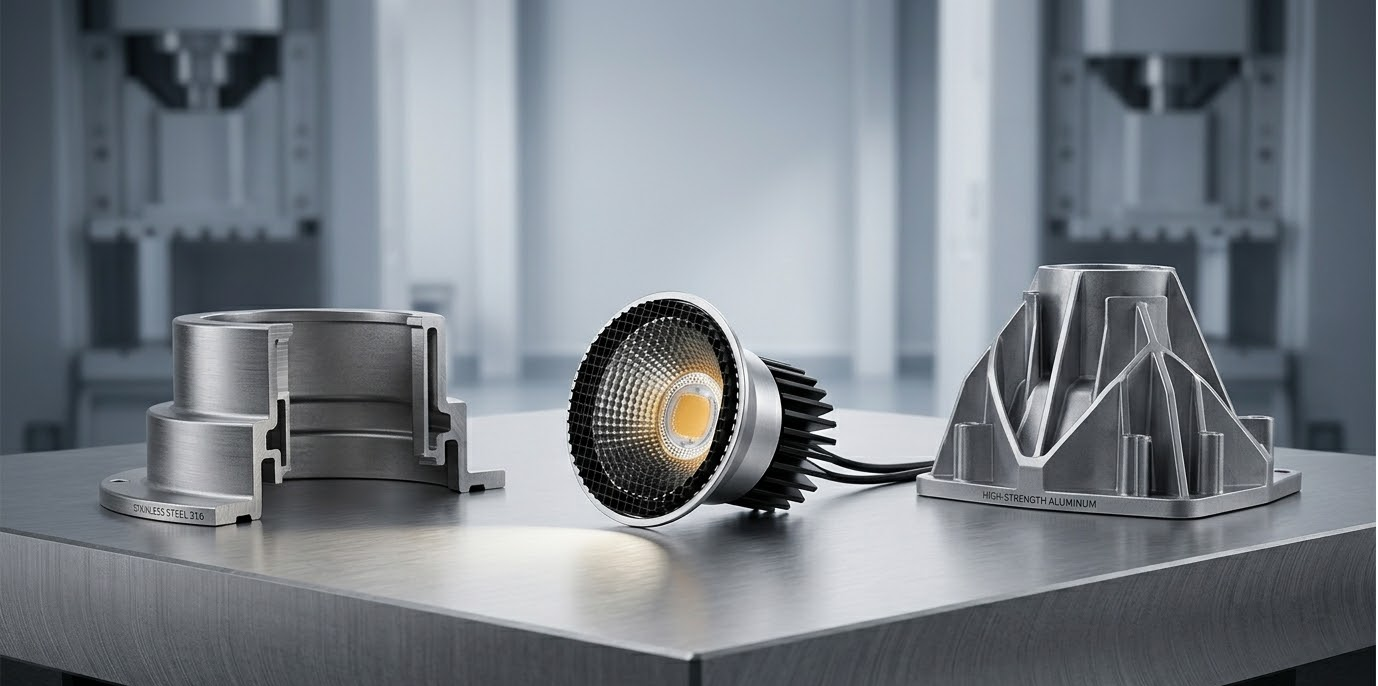
As businesses increasingly prioritize sustainability, the choice of materials in manufacturing has become a critical factor that shapes brand perception and meets market demands. At Anova, we are leading the charge by integrating ocean-bound plastic into our light housing solutions, offering a sustainable alternative to traditional plastics. This document explores why transitioning to ocean-bound plastic not only aligns with environmental goals but also strengthens brand reputation among eco-conscious B2B clients.
The Inherent Liabilities of Traditional Plastics
Traditional plastics, while widely used in light housing, pose significant environmental challenges that can become brand liabilities. Their production and disposal contribute to pollution, resource depletion, and long-term ecological harm, making them a less viable option for brands aiming to meet modern sustainability standards.
A Comprehensive Lifecycle Analysis
The lifecycle of conventional plastics, such as virgin polypropylene (PP) or polycarbonate (PC), begins with fossil fuel extraction—a process that emits substantial greenhouse gases and carries a high cradle-to-gate carbon footprint. Manufacturing these plastics requires energy-intensive processes, further increasing their environmental cost. Once discarded, these materials can take centuries to decompose, clogging landfills and releasing harmful microplastics. For any business, continued reliance on such materials represents a tangible risk that invites scrutiny from clients, regulators, and a market demanding change.
The Influence of Consumer and Market Expectations
This is not merely a regulatory issue; it is a market reality. B2B clients are directly influenced by end-consumer demand. A 2023 global survey indicated that 78% of consumers prefer brands with sustainable practices. This market shift compels B2B buyers to align specifications with ESG expectations, making the adoption of environmentally responsible materials a competitive necessity.
The Solution: Certified and Traceable Ocean-Bound Plastic
The primary challenge is to meet this demand without compromising quality. Ocean-Bound Plastic (OBP) offers a definitive solution. By repurposing high-risk coastal waste into high-performance materials, Anova provides an innovative pathway to achieving both environmental and business objectives.
From Coastal Waste to an Engineering-Grade Asset
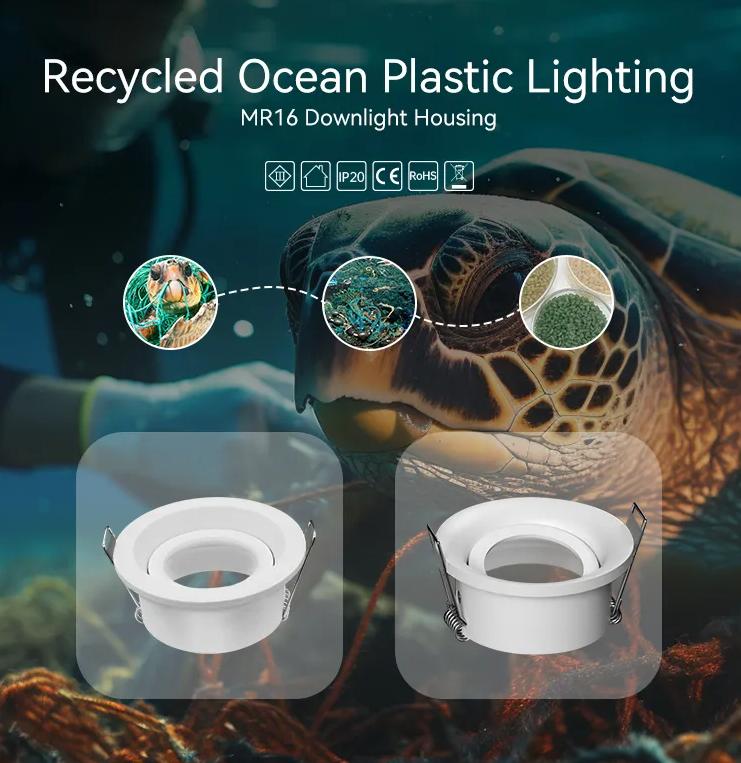
Ocean-Bound Plastic is defined as plastic waste collected within 50 kilometers of coastlines, particularly from regions lacking formal waste management. This plastic is intercepted before it can enter the oceans. Through a meticulous process of cleaning, sorting, and re-engineering, this material is transformed into a consistent, high-quality feedstock suitable for precision manufacturing of products like our 68mm MR16 Downlight Housings and Anti-Glare/360° Gyro frames.
The Importance of Auditable Traceability
Sustainability claims require verifiable proof. For this reason, Anova implements the RCS (Recycle Claim Standard), a rigorous chain-of-custody control system. This ensures that all recycled content is documented from its source into the finished housing. The benefit for our clients is the ability to present their ESG credentials with full confidence, backed by a certification that builds trust and mitigates any risk of greenwashing accusations.
Performance Without Compromise: A Technical Comparison
A critical question for any engineer is whether performance is compromised. The data provides a clear answer: no. Anova’s OBP housings have been engineered to meet and often exceed the demanding, lighting-grade requirements of traditional plastics.
- Robust Durability: OBP delivers high tensile strength and formidable impact resistance (IK07-IK08 targets), making it suitable for both indoor and validated outdoor applications.
- Thermal and Fire Safety: The material is designed for safety and stability, meeting critical flammability targets including the stringent UL 94 (V-0 or V-2) and IEC 60695-2-11 Glow-Wire tests.
- Long-Term Reliability: Validated to support luminaires for a 50,000-hour system life, our enclosures undergo rigorous UV/weathering and salt spray testing to ensure lasting performance.
Tangible Returns: Enhanced Brand Perception and Market Advantage
The adoption of OBP light housings yields advantages that extend beyond product performance to enhance overall brand equity and market position. This decision creates a credible sustainability narrative, grounded in traceable content and proven technical performance.
Strengthened Bid Competitiveness and Quantifiable Tender Advantage
In modern procurement, choosing the lowest price is obsolete. Tenders are now won based on the “Most Economically Advantageous Tender” (MEAT) model, where sustainability is a key evaluation criterion with significant weight. ESG factors are no longer a footnote; they frequently constitute 10% to 30% or more of the total evaluation score.
Anova’s certified OBP provides a direct, measurable advantage in this process. Your bid can score specific points for using verified recycled content, aligning with circular economy goals, and demonstrating a transparent, low-risk supply chain. In a competitive tender, securing an additional 2-6% in the overall score through a strong ESG proposal is often the decisive factor that separates a winning bid from the rest. This transforms your sustainability commitment from a simple corporate value into a quantifiable asset that directly contributes to winning contracts.
Increased Client Loyalty
Eco-conscious stakeholders actively seek partners who share their values. OBP products enable brands to meet this demand, fostering differentiation and deeper client loyalty in a competitive marketplace.
Future-Proofing and Regulatory Alignment
Global policies are progressively favoring recycled content. By proactively adopting traceable, recycled materials now, businesses can prepare for future mandates, transforming a potential compliance challenge into a current market advantage.
Supply Chain and Partnership Reliability
Effective innovation requires a foundation of supply chain reliability. Anova has engineered its supply chain to be as robust as its products, ensuring a seamless integration for our partners.
- Stable Material Availability: A multi-source feedstock strategy combined with qualified compounding partners mitigates supply risks and ensures consistent material availability.
- Efficient Project Timelines: Our supply chain is structured for efficiency. Samples are typically available within 1–2 weeks, with mass production commonly ready 3–4 weeks after approval.
- Comprehensive Documentation: To streamline audits and customs, a complete Compliance & Import Pack is provided, which includes the RCS certificate, RoHS/REACH statements, Certificate of Origin (CoO), and MSDS.
Anova: A Partner in Sustainable Innovation
Since its founding in 2003, Anova Lighting has maintained a commitment to quality and innovation within the lighting industry. Our expansion into OBP represents the next chapter in this commitment, combining environmental responsibility with cutting-edge design. We offer comprehensive, end-to-end support for our B2B clients.
We invite you to explore a partnership:
- For Importers: We provide a comprehensive Compliance & Import Pack to ensure effortless audits and customs clearance.
- For Brands (OEM/ODM/OBM): We encourage you to request engineering samples and a material color chip set for your evaluation.
- For Engineering Contractors: We offer 2-week validation slots to test our products against your key performance clauses.
Conclusion: A Strategic Imperative for a Sustainable Future
In conclusion, the transition to ocean-bound plastic represents a strategic business imperative, not merely a material substitution. It aligns a brand with critical regulatory trends, evolving consumer expectations, and corporate ESG goals. Anova Lighting empowers its B2B clients to make this shift seamlessly, providing high-quality, eco-friendly solutions that enhance brand reputation and sharpen their competitive edge in the marketplace.
Frequently Asked Questions (FAQs)
Q1: Does OBP compromise performance or durability?
A1: No. Anova’s OBP housings are engineered to meet stringent lighting-grade requirements, including UL 94 for flammability, GWT targets, and tests for UV/thermal cycling and mechanical impact, as specified per model.
Q2: How does OBP help brand reputation and bids?
A2: It helps by turning sustainability into a quantifiable scoring advantage. Tender committees now assign significant weight—often 10-30% of the total score—to ESG criteria. Our RCS-certified OBP allows your bid to score direct points for recycled content and circular economy principles, directly improving your standing in the “Most Economically Advantageous Tender” (MEAT) evaluation model. This transforms your sustainability claims from a simple narrative into a measurable asset that can be the decisive factor in winning contracts, while simultaneously enhancing your brand’s reputation for genuine environmental responsibility.
Q3: What documents can you provide for audits and import?
A3: We provide a complete documentation suite, including the RCS certificate, RoHS/REACH statements, CoO, HS code, MSDS, packaging/labeling specifications, dimensional and material test summaries, and inspection checklists.