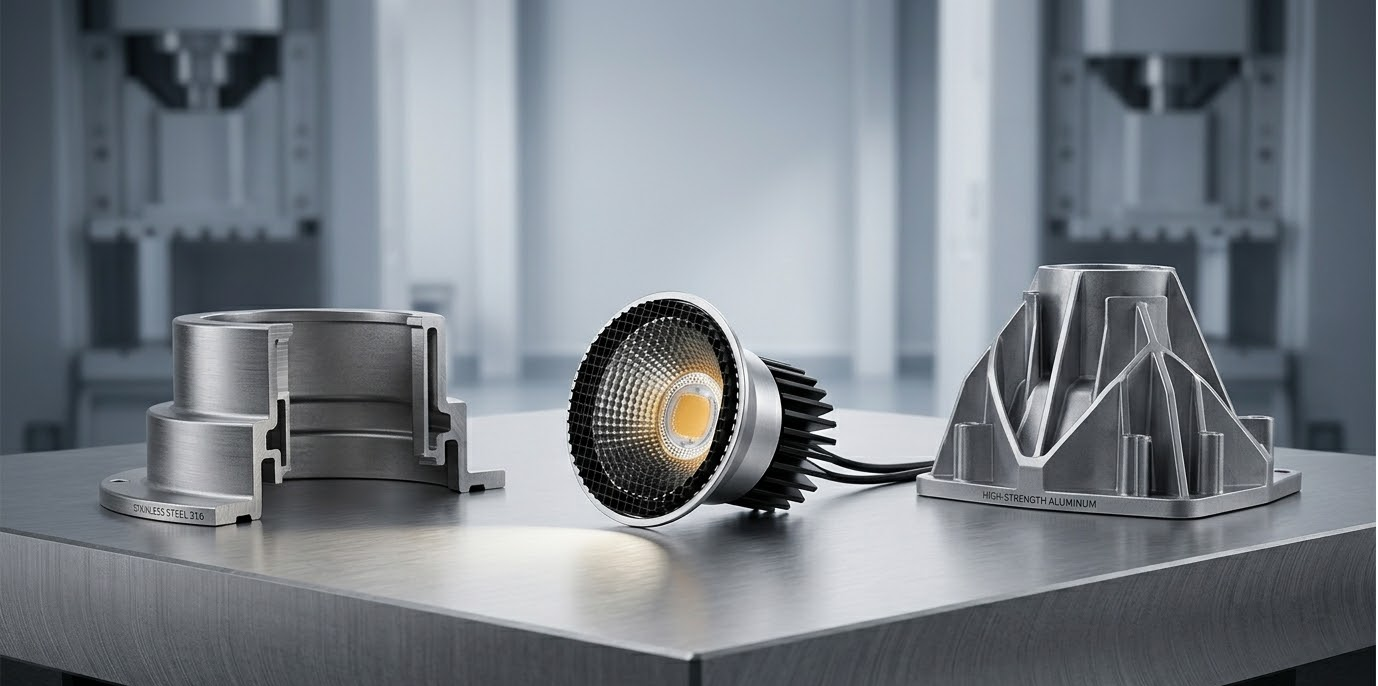
Choosing between recessed and surface mounted downlights is an important decision for commercial and residential lighting projects.
The right downlight solution affects not only the appearance of a space, but also installation requirements, lighting performance, maintenance accessibility, and long-term reliability.
Recessed downlights and surface mounted downlights are two common lighting solutions used in hotels, retail spaces, offices, restaurants, and residential projects. However, they are designed for different installation conditions and application needs.
This guide explains the key differences between recessed and surface mounted downlights and helps you select the right option based on your project requirements.

Recessed vs Surface Mounted Downlights: Key Differences
The main difference between recessed and surface mounted downlights is how the fixture is installed and integrated into the ceiling.
Recessed downlights are installed inside the ceiling, creating a clean and minimal appearance. They are commonly selected for projects that require a seamless ceiling design and controlled lighting distribution.
Surface mounted downlights are installed directly onto the ceiling surface. They are often preferred when ceiling depth is limited, installation flexibility is required, or future maintenance needs to be considered.
For lighting projects, the best choice depends on ceiling structure, lighting requirements, installation conditions, and the expected user experience.
Recessed vs Surface Mounted Downlights: Key Differences
Recessed downlights are ideal for applications where a clean ceiling appearance and precise lighting control are required.
Common applications include:
- Hotels and hospitality spaces
- Retail stores
- Offices
- Showrooms
- Modern residential interiors
Because the fixture is installed into the ceiling, recessed downlights create a low-profile appearance and help maintain a consistent architectural design.
For commercial projects, factors such as beam angle, glare control, color rendering, and maintenance access should be considered before selecting the fixture.
Where Surface Mounted Downlights Are a Better Choice
Surface mounted downlights are a practical solution when recessed installation is difficult or when ceiling conditions limit installation depth.
They are commonly used in:
- Renovation projects
- Concrete ceilings
- Low ceiling spaces
- Commercial areas requiring easier installation access
Unlike recessed fixtures, surface mounted downlights do not require cutting large ceiling openings. This can reduce installation complexity and make future maintenance easier.
For projects where flexibility and installation efficiency are important, surface mounted downlights can provide an effective alternative.
Recessed Downlights: Features and Applications
Recessed downlights are installed inside the ceiling, creating a clean and integrated appearance.
Because the fixture is hidden within the ceiling structure, recessed downlights are often selected for projects that require a minimalist visual effect and controlled lighting distribution.
Typical applications include:
- Hotels and hospitality spaces
- Retail stores
- Offices
- Showrooms
- Modern residential interiors
For professional lighting projects, selection should consider factors such as beam angle, glare control, color rendering, ceiling depth, and maintenance requirements.

Surface Mounted Downlights: Features and Applications
Surface mounted downlights are installed directly onto the ceiling surface without requiring a recessed opening.
They are a practical choice when ceiling depth is limited, structural changes are difficult, or easier installation and maintenance are required.
Common applications include:
- Renovation projects
- Concrete ceilings
- Low ceiling spaces
- Commercial areas requiring flexible installation
Compared with recessed downlights, surface mounted solutions provide greater installation flexibility and easier access for future maintenance.

Recessed vs Surface Mounted Downlights: Installation Comparison
Installation requirements are one of the most important factors when choosing between recessed and surface mounted downlights.
Recessed Downlight Installation
Recessed downlights require sufficient ceiling depth and a suitable ceiling structure.
The installation usually includes:
- Cutting the ceiling opening
- Connecting electrical wiring
- Fixing the fixture with mounting clips
This solution provides a clean appearance but requires accurate installation planning.
Surface Mounted Downlight Installation
Surface mounted downlights are installed directly onto the ceiling surface.
They usually require:
- A suitable mounting surface
- Electrical connection
- Fixing screws or brackets
This makes them a preferred option for renovation projects or locations where ceiling modification is limited.
Installation Process for Recessed Downlights
Installing ceiling-inserted lights is generally manageable but requires precision. First, you cut a tidy hole in the ceiling to fit the light. Next, you connect the wires, often using a safe junction box. Then, you fix the light into the ceiling and add the edge for a polished look.

This process is usually straightforward in newer homes. But older houses might have limited ceiling space or outdated wiring, which can complicate things. In such cases, it’s wise to call a trained electrician to handle challenges safely. ANOVA’s 23W Round LED Recessed Downlight simplifies this with its light, eco-conscious design.

Requirements for Installing Surface-Mounted Downlights
Surface-attached lights are easier to install. You begin by checking that the ceiling is strong and clean. Then, you connect the fixture to a power source, usually without major ceiling changes. After that, you secure the fixture with screws or braces. This simple approach suits places with solid ceilings or little hollow space.

How to Choose Between Recessed and Surface Mounted Downlights?
The best choice depends on several project factors, including ceiling structure, lighting requirements, maintenance needs, and design goals.
1. Ceiling Structure
Recessed downlights require enough ceiling space for installation.
If the ceiling is shallow, concrete-based, or difficult to modify, surface mounted downlights may be a better solution.
2. Lighting Requirements
Recessed downlights are often preferred for focused lighting applications where precise beam control and low glare are important.
Surface mounted downlights are suitable when flexible installation and wider illumination are required.
3. Maintenance Requirements
For commercial projects, maintenance should be considered before installation.
Easy access to drivers, replaceable components, and simple installation methods can reduce future service costs.
4. Design Goals
Recessed downlights create a clean architectural appearance.
Surface mounted downlights can become a visible design element while providing installation flexibility.
How Do Lighting Performance and Efficiency Compare?
How lights perform and save energy is vital when deciding.
Illumination Capabilities of Recessed Downlights
Ceiling-inserted lights are great for specific tasks. They direct light straight down, perfect for spots like kitchen counters or desks. With energy-saving bulbs, like those from ANOVA, they use little power, typically producing 80–120 lumens per watt. Many also have glare-reducing features, like honeycomb designs, to keep light gentle on the eyes.
Light Distribution in Surface-Mounted Downlights
Surface-attached lights often spread light more widely. Their open design brightens larger areas, making them suitable for general room lighting. Some models let you adjust the light’s angle to focus it where needed. Like inserted models, energy-saving surface-attached lights are efficient, often delivering over 100 lumens per watt.

Why Choose ANOVA for Downlight Projects?
ANOVA Lighting supports contractors, distributors, and lighting designers with customized downlight solutions for different project requirements.
Our capabilities include:
- Recessed and surface mounted downlight solutions
- Custom beam angle options
- Anti-glare lighting design
- Different color temperature options
- Driver and dimming compatibility
From hospitality projects to commercial spaces, ANOVA helps customers select reliable lighting solutions based on application requirements.
Conclusion
Choosing between recessed and surface mounted downlights depends on your ceiling structure, lighting goals, installation conditions, and maintenance requirements.
Recessed downlights are ideal when a clean ceiling appearance and controlled lighting effect are required.
Surface mounted downlights are a practical option when installation flexibility and easier maintenance are important.
By understanding these differences, you can select the right downlight solution for your project.
FAQs
Are recessed downlights better than surface mounted downlights?
Neither option is always better. Recessed downlights are suitable for projects requiring a clean ceiling appearance and controlled lighting, while surface mounted downlights are better for projects where installation flexibility and maintenance access are important.
Can surface mounted downlights replace recessed downlights?
Yes. Surface mounted downlights can be used as an alternative when ceiling depth is limited or recessed installation is not practical.
Which downlight is better for commercial projects?
The choice depends on the project requirements. Hotels, retail spaces, and offices often use recessed downlights for architectural appearance, while renovation and concrete ceiling projects may benefit from surface mounted solutions.