In the competitive landscape of commercial lighting, the difference between a successful project and a costly retrofit often comes down to a single metric: Correlated Color Temperature (CCT). For architectural lighting designers, specifying the wrong Kelvin value can flatten a room’s depth or disrupt a carefully curated atmosphere. However, for importers and electrical wholesalers, the challenge is even more tangible—it is a matter of logistics, inventory pressure, and capital efficiency.
The traditional model of stocking distinct Stock Keeping Units (SKUs) for 2700K, 3000K, and 4000K fixtures is becoming obsolete. It drains warehouse space and complicates project planning. As we navigate the evolving demands of the B2B lighting market, mastering CCT specifications is no longer just about aesthetics; it is about leveraging modular technology to streamline operations. This guide explores the strategic application of CCT and introduces how the Anova 7W Tri-CCT MR16 Module is revolutionizing supply chains for our partners worldwide.
The Science of CCT: Precision Beyond Aesthetics
Correlated Color Temperature defines the color appearance of a light source, measured in degrees Kelvin (K). While it is easy to categorize light as “warm” or “cool,” the technical implications for commercial spaces require a more data-driven approach.

Warm White (2700K – 3000K): The Standard for Hospitality In hospitality environments such as hotel lobbies, residential lounges, and high-end restaurants, the goal is to trigger relaxation. Light in this spectrum promotes the release of melatonin, signaling rest. However, consistency is critical. A 3000K source from one manufacturer can look pinkish or greenish compared to another due to deviations in the Planckian locus. At Anova, we enforce strict SDCM (Standard Deviation Colour Matching) < 3 standards. This ensures that every module you install maintains a uniform hue, eliminating the “patchwork” effect that ruins ceiling aesthetics in large corridor projects.
Neutral to Cool White (4000K – 5000K): Precision for Retail and Offices For retail showrooms and modern office spaces, clarity is paramount. A 4000K neutral white fosters alertness and clean visual lines. But CCT cannot be viewed in isolation—it must be paired with high color fidelity. Our modules are engineered with a CRI (Color Rendering Index) > 90. For retail shopfitters, this means merchandise colors are rendered vibrantly and authentically. A red dress looks truly red, not dull brown. High CRI combined with correct CCT specification ensures that the lighting serves the merchandise, increasing sales conversion rates for your retail clients.
The Strategic Advantage of Modular & Adjustable Design
For lighting wholesalers and distributors, the “fixed CCT” paradigm presents a significant risk. If a contractor orders 500 downlights in 3000K but the end-client changes their mind to 4000K mid-construction, you are left with dead stock and a rush order.
The industry is shifting towards modularity to mitigate this risk. By separating the light engine from the housing, specifically using our MR16 LED Module system, you gain unprecedented flexibility.
Streamlined Inventory for Importers: For importers, the path to inventory efficiency is clear: shift focus from a broad range of integrated fixtures to core modular components. The Tri-CCT Adjustable MR16 Module is the cornerstone of this strategy. By consolidating 2700K, 3000K, and 4000K options into a single unit, you can then pair this module with dozens of different Anova Downlight Housings (trimless, tilted, IP65 waterproof, or square frames). This “One Module, Many Housings” strategy reduces your SKU count significantly, frees up warehouse capital, and ensures you always have the right solution for the contractor’s immediate needs.
Future-Proofing for Contractors: For engineering contractors, the ability to adjust CCT on the job site is a massive value-add. It eliminates delays caused by specification changes. Furthermore, modular design aligns perfectly with strict ErP (Energy-related Products) eco-design regulations. Unlike integrated fixtures that become e-waste when the LED fails, our modular system allows for the replacement of just the light source. This ease of maintenance is a key selling point when bidding for government or green-building certified projects.
Solution: The 200mA 7W 50mm Tri-CCT LED MR16 Module

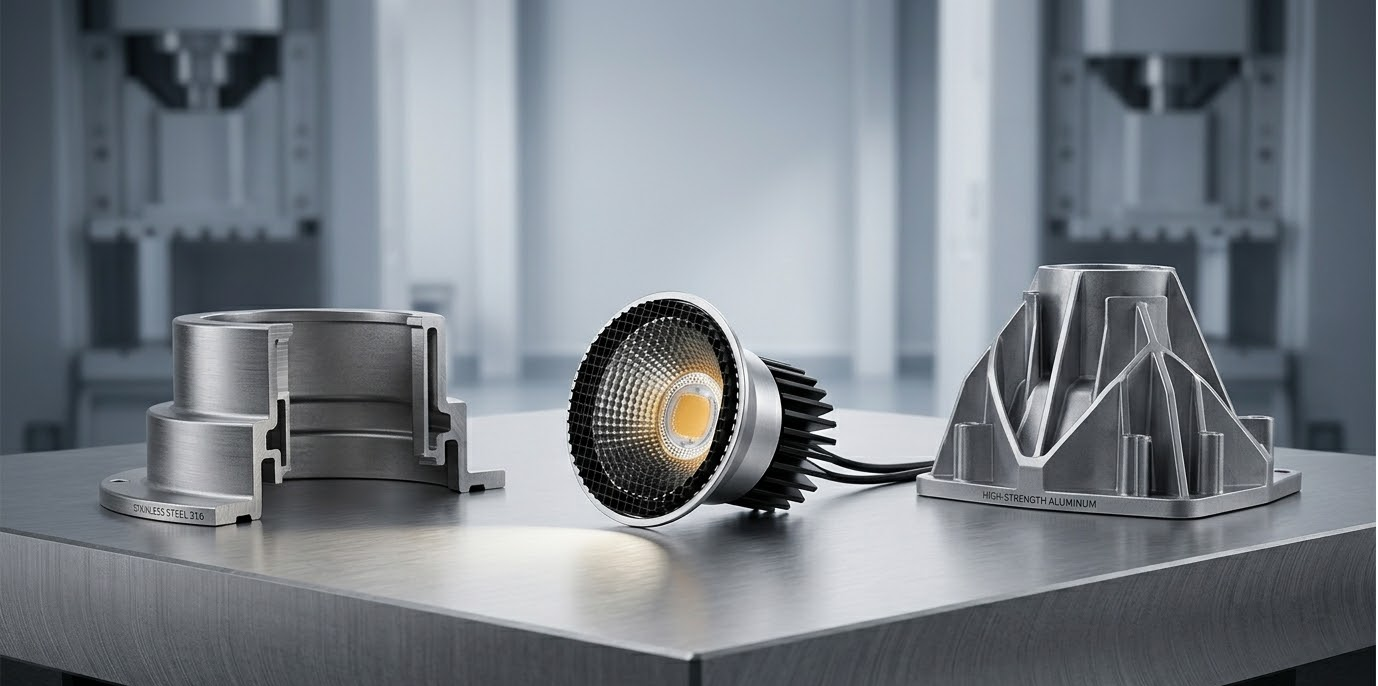
To address these market needs, we present our flagship solution: the 200mA 7W 50mm Tri-CCT Adjustable LED MR16 Module. This is not just a replacement bulb; it is a professional-grade light engine designed for heavy-duty commercial performance.
Technical Superiority for Specifiers
- Tri-CCT Versatility: A discreet switch on the module allows instant selection between warm, neutral, and cool white. This flexibility empowers lighting designers to finalize the “feel” of a room during the final fit-out, ensuring total client satisfaction.
- Optical Precision: We offer interchangeable lenses with beam angles of 15°, 24°, 36°, and 60°. This allows the same module to be used for narrow spot accenting in a gallery or wide floodlighting in a general office area.
- Visual Comfort: In high-end applications, glare control is non-negotiable. Our modules are compatible with honeycomb filters and deep-recessed housings to achieve UGR < 19, and in some configurations, UGR < 16. This “dark light” effect ensures that the source of illumination is concealed, prioritizing human visual comfort.
Integration with Advanced Control Systems Unlike simple retrofit bulbs, this module is designed for professional integration. Because it separates the LED engine from the driver, it offers universal compatibility. Contractors can pair this 7W module with DALI, Triac, 0-10V, or Zigbee drivers depending on the project’s control requirements. Furthermore, its low-voltage operation (working seamlessly with constant current or 24V DC systems) makes it the ideal candidate for solar-powered low-voltage DC grids. As off-grid and net-zero buildings become more common, having a DC-ready lighting solution positions your product portfolio at the cutting edge of green technology.
Anova: Pioneering Sustainable Manufacturing Since 2003

When you partner with us, you are not just buying a product; you are leveraging over two decades of manufacturing expertise. Established in 2003 in Foshan, China—the heart of the global lighting industry—Anova has grown into a premier ODM manufacturer serving top-tier global brands.
Engineering Trust: Beyond Patents to Proven Sustainability Our reputation is built on rigorous quality control and verifiable innovation. While we hold over 50 national patents for technologies like our advanced heat sink designs, our most significant qualification for modern buyers is our Recycled Claim Standard (RCS 2.0) Certification.
In a market often clouded by greenwashing practices, RCS certification is a tangible proof of authenticity. It gives us a third-party validation of our supply chain, from source material (fishing nets) through to our finished downlight housing. This is a guarantee that our materials are indeed being diverted from entering our oceans and that our projects adhere to a set of sustainability principles necessary for a certificate such as LEED or BREEAM.
The Ocean Plastic Revolution We are proud to lead the industry in material innovation. Anova creates downlight housings using Recycled Ocean Plastic harvested from discarded fishing nets.
Clarification for Professionals: It is crucial to distinguish our material from biodegradable plastics. Biodegradable materials can degrade prematurely, posing safety risks in electrical fixtures. In contrast, our recycled marine plastic is engineered for high hardness, heat resistance, and fire retardancy. It turns waste into a durable industrial resource without compromising safety or longevity. By integrating our 7W Tri-CCT Module with our Recycled Ocean Plastic Housings, wholesalers can offer a compelling narrative: a high-performance, specification-grade fixture that actively cleans our oceans. This is a powerful differentiator in today’s ESG-conscious market.
Conclusion
The era of static, single-function lighting is over. For wholesalers and contractors, success now depends on agility and efficiency. Specifying CCT is no longer a rigid choice made months in advance; it is a flexible, on-site decision made possible by technology. By adopting the Anova 7W Tri-CCT MR16 Module, you streamline your inventory, empower your installers, and deliver superior visual results to end-clients. When combined with our RCS-certified manufacturing, you have a lighting solution that is ready for the future of design and environmental responsibility.
Ready to optimize your inventory and elevate your projects?
[Request a Sample Kit of Tri-CCT MR16 Module for Your Next Commercial Project]
FAQs
Q: What benefits does the Tri-CCT feature offer the electrical wholesaler?
A: The Tri-CCT feature allows the wholesaler to have only one stock-keeping unit (SKU), which is the adjustable module and includes the three major color temperatures (2700K, 3000K, and 4000K). This significantly cuts down on inventory costs and the risks associated with dead stock and the fulfillment of varied contractors’ orders.
Q: Is the Recycled Ocean Plastic housing safe for commercial use compared to metal?
A: Yes, absolutely. Unlike biodegradable plastics which may degrade over time, our Recycled Ocean Plastic is re-engineered for industrial durability. It features high heat resistance, structural hardness, and fire safety compliance equivalent to traditional materials. It offers the added benefit of being corrosion-resistant (IP65 options available), making it ideal for coastal or humid commercial environments.
Q: Can I use the 7W MR16 Module with smart lighting systems like DALI?
A: Yes. The module is designed with an external driver configuration. This means you can pair the 200mA constant current module with any compatible third-party driver, including DALI, 0-10V, Triac dimmable, or smart protocols like Zigbee and Casambi. This flexibility makes it perfect for complex commercial integration.