Smart hotels have moved far beyond simple on/off control. Guests now expect smooth ambience transitions, precise dimming scenes, and responsive automation. Meanwhile, contractors face the pressure of delivering stable, low-maintenance systems that integrate seamlessly with hotel management software, sensors, and room-control networks. In this increasingly complex environment, the choice between 24V DC and traditional AC lighting determines up to 80% of the lighting system’s long-term performance.
Industry dialogues and contractor reports consistently reveal the same issues: flickering at low dimming levels, incompatible drivers, unexpected callbacks, and smart modules that behave differently from room to room. These failures often come not from the luminaires themselves but from the underlying voltage architecture of the project.
This article provides a 2025 engineering-grade comparison between 24V DC and AC lighting, supported by real installation insights, human-centric lighting requirements, product reliability concerns, and documentation found in contractor-focused reports. The goal is to help you select a future-proof foundation for your next hospitality project.
Creating a Strong Reason to Switch
Lighting failures in hotels typically fall into three high-impact categories:
Safety vulnerabilities caused by high-voltage AC in tightly insulated ceiling cavities
Poor dimming stability that disrupts guest experience and makes scenes unreliable
System integration challenges when smart controls interact unpredictably with AC drivers
When a hotel deploys hundreds or thousands of luminaires, these “small issues” quickly become operational risks. Maintenance teams are forced to close guest floors to repair flickering fixtures. Contractors must return—sometimes multiple times—to diagnose non-linear dimming curves or mismatched protocols.
A 24V DC architecture eliminates most of these pain points before installation begins.
Core Value Comparison: Why DC Architecture Drives Better Performance
Safety: Lower Voltage, Lower Liability
A 24V SELV (Safety Extra Low Voltage) system significantly reduces shock hazards, insulation failures, and overheating risks associated with AC drivers. This is especially relevant in ceilings packed with insulation, HVAC ducts, or vapour barriers—conditions documented in Nordic installation environments where preserving airtightness and avoiding condensation is crucial.
In hotel projects, workers frequently handle luminaires during maintenance or post-renovation adjustments. Low-voltage systems allow these tasks to be performed faster and more safely, reducing both downtime and labour cost.
Dimming Depth and Light Quality: DC Enables Ultra-Smooth Performance
AC dimming introduces waveform distortion, voltage fluctuation, and inconsistency across different brands and drivers. This results in:
Flickering at low dimming levels
Scene mismatch between rooms
Reduced driver lifespan due to thermal stress
By contrast, a 24V DC ecosystem maintains stable output, delivering:
Deep dimming (<1%)
Ripple-free illumination
Uniform performance across large installations
These benefits become critical when paired with modern anti-glare luminaires such as recessed downlights with UGR<10, where stable current directly improves visual comfort.
Smart Control Integration: DC Simplifies Everything
Hotels now depend on layered smart systems—occupancy sensors, daylight control, KNX room automation, Zigbee gateways, and mobile control interfaces. AC dimming devices often struggle with:
Protocol mismatch
Load sensitivity
Flicker during scene transitions
Inconsistent response times
Contractor interviews highlight that smart lighting failures are a major cause of costly post-handover callbacks.
A 24V DC backbone minimizes these conflicts and offers a more predictable environment for both wired and wireless smart modules.
Evidence and Field Experience: What Engineers See on Real Projects
Safety and Installation Efficiency
DC wiring avoids the need for high-voltage junction boxes, deep recesses, and enhanced insulation requirements. In geographically cold regions or insulated hotel ceilings, a low-voltage system reduces the danger of moisture ingress, driver overheating, and vapour barrier compromise.
Dimming Stability in High-Density Spaces
Hotels often use repeated lighting patterns—corridors, guestrooms, meeting rooms—where dozens of fixtures must dim and transition with perfect synchronisation. DC drivers deliver consistent behaviour regardless of cable length or load variation.
TCO: Lower Maintenance, Lower Energy Waste
From design to operation, 24V DC simplifies every stage:
| Stage | AC System Challenges | 24V DC System Benefits |
| Design | Multiple dimming protocols | Unified low-voltage standard |
| Installation | Higher skill & insulation requirements | Faster and safer |
| Commissioning | Flicker and curve mismatch | Predictable dimming |
| Maintenance | Power shutdowns required | Safe hot-swap potential |
| Operational Cost | PF fluctuation & heat loss | High efficiency (PF>0.90) |
The cumulative savings often exceed the initial investment difference.
A 2024 Facilities Management Benchmark Study found that the average cost of a single ’emergency lighting call-back’ in a commercial hospitality setting has risen to $450–$600 per incident (inclusive of labor and lost room revenue). Implementing low-voltage DC systems with centralized drivers reduces the ‘Mean Time To Repair’ (MTTR) by 40%, significantly lowering the Total Cost of Ownership.
Source: International Facility Management Association (IFMA).
Solution: Building a 24V DC Lighting Ecosystem for Hospitality
To create a reliable DC architecture, the choice of driver matters as much as the luminaires themselves. Below are recommended drivers that align with low-voltage hotel deployments.

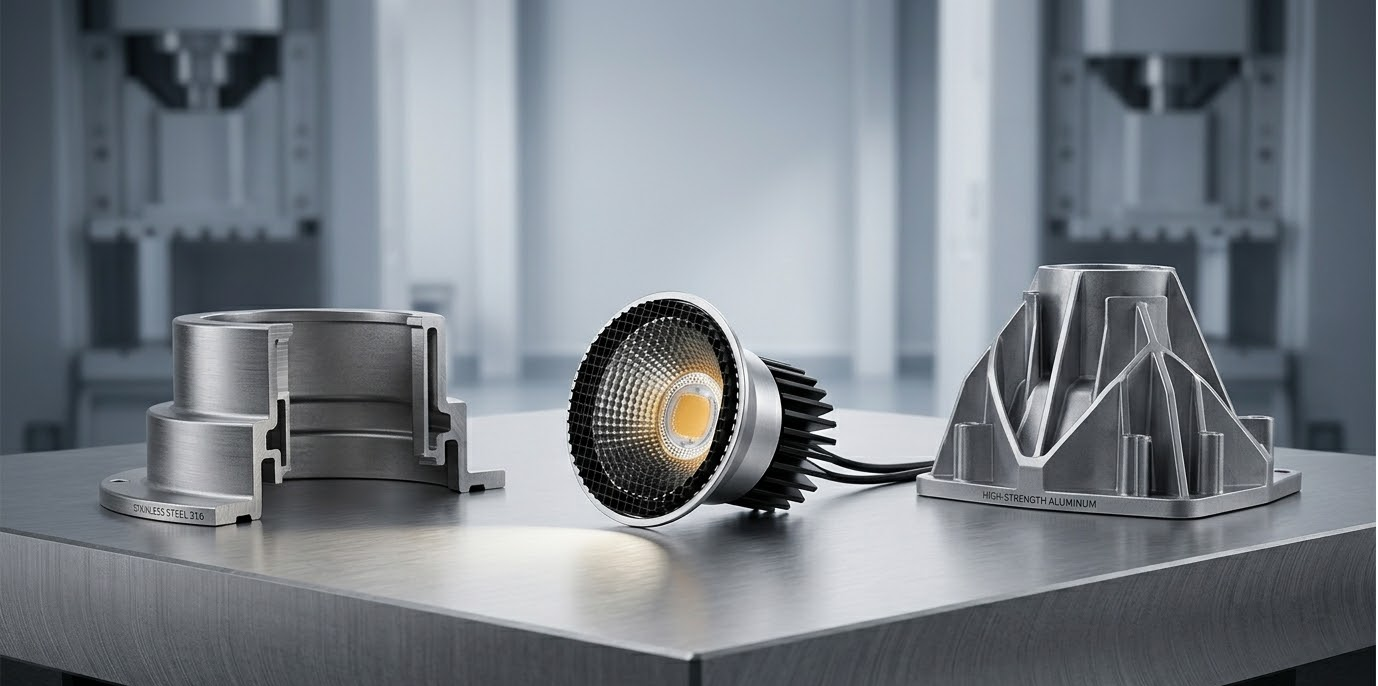
10W Tunable White 24V DC COB LED Module
Feature: 24V DC low-voltage input with high-quality Chip-on-Board (COB) integration technology.
Advantage: The 24V DC input effectively mitigates the voltage drop effect over long wiring runs, enabling seamless and uniform continuous lighting.
Benefit: Guarantees consistent brightness and color temperature across applications like long corridors and large guest rooms, preventing the luminance or CCT decay often seen at the end of runs, while offering superior dimming performance.
This Module utilizes 24V DC low-voltage power, which significantly enhances the safety and reliability of the lighting system. It also supports longer serial installations of LED modules, reducing the number of required power feed points, thereby simplifying the installation process. It is an ideal choice for commercial lighting projects prioritizing stability and efficiency.
Eco-engineered downlight housings
These housings are produced from recycled ocean-bound plastic, with full RCS traceability and engineering validation in mechanical, thermal, and UV performance.
Such luminaires also support sustainability targets—an advantage in ESG reporting and tender proposals for modern hospitality groups.
Why Anova Is a Trusted Partner for Large-Scale Hotel Lighting
Anova has over two decades of experience supporting engineering contractors, designers, and OEM clients with:
Verified performance data
Traceable sustainable materials
Robust supply chain and reliable delivery
Low-glare optics and smart-control compatibility
Up-to-date documentation for compliance and import
These capabilities reduce project uncertainty and contribute directly to long-term hotel operational stability.
Explore more solutions on the Anova Lighting official website.
Conclusion: 24V DC Is the Clear Winner for 2025 Smart Hotel Projects
Comparing safety, dimming quality, engineering simplicity, and maintenance cost reveals a decisive conclusion:
24V DC is the most stable, scalable, and future-ready voltage architecture for hospitality lighting.
As hotel environments demand deeper automation, stronger sustainability credentials, and smoother guest experiences, low-voltage lighting provides:
Safer installation
Lifetime-stable dimming
Long-term maintenance efficiency
Improved smart-control integration
Higher visual comfort with modern downlights
For contractors and engineering firms, this is also a strategic shift that reduces risk, callbacks, and system failures—protecting both margins and reputation.
FAQ
Q: Why is 24V DC considered a safer architecture than traditional AC lighting for hotel ceilings?
A: Yes—24V DC significantly enhances installation and operational safety. According to contractor pain-point reports, high-voltage AC inside insulated or airtight ceiling cavities increases the risks of overheating, insulation damage, and accidental shock during maintenance. 24V falls under SELV (Safety Extra-Low Voltage), allowing technicians to work faster and with far lower liability concerns. This aligns with installer challenges described in Nordic ceiling environments, where airtightness and vapour-barrier protection make AC wiring more hazardous and time-consuming.
Q: Is dimming performance noticeably better with 24V DC in guest rooms, corridors, and lobbies?
A: Absolutely. AC dimming often introduces flicker, inconsistent dimming curves, and thermal stress on drivers, especially when multiple brands or drivers are mixed on a project. 24V DC delivers ripple-free, ultra-low (<1%) dimming and consistent scene transitions across large installations. This is critical for guest-facing spaces that use UGR<10 anti-glare downlights, as stable current directly improves visual comfort and human-centric lighting quality.
Q: Why do engineers prefer 24V DC when integrating KNX, Zigbee, DALI, or mobile-based hotel room controls?
A: Engineers report that AC systems often produce protocol mismatch issues, load sensitivity, or flicker during scene changes. 24V DC offers a unified low-voltage platform that ensures predictable performance across sensors, dimmers, and automation modules. This also reduces the debugging burden mentioned by lighting contractors, who fear complex smart systems due to callback risk and maintenance liability.
To help you plan your next project, you can request a free 24V DC ROI calculation sheet for your hotel lighting upgrade.