In the current landscape of premium domestic architecture, the role of lighting has experienced a seismic shift, migrating from a secondary utility to a primary structural driver that dictates the very essence of spatial luxury and physiological comfort. For the modern lighting consultant, the high-end project is no longer just about lux levels; it is about building a secure, responsive ecosystem where light interacts seamlessly with human biology and smart automation. However, as we push the boundaries of minimalist aesthetics and complex integration, the age-old reliance on high-voltage Alternating Current (AC) distribution has increasingly emerged as a friction point, a technical legacy that often compromises both the designer’s vision and the system’s long-term reliability.
The 110V/220V AC grid, while ubiquitous for over a century, carries an inherent set of liabilities—ranging from the catastrophic risk of electrical fires to the subtle, nerve-grating inconsistencies in dimming performance—that the modern luxury consumer is no longer willing to accommodate. Recognizing this growing tension, Anova, a manufacturer with two decades of deep-rooted expertise in precision ODM engineering, has been instrumental in orchestrating the industry’s pivot toward 24V DC (Direct Current) low-voltage topologies. This move is far more than a simple hardware swap; it is a tactical reconfiguration of how energy is managed within the home, aimed at stripping away the logistical burdens that have historically plagued international importers and site contractors alike.
The Commercial Logic: De-Risking the Supply Chain and the Job Site
The decision to specify 24V DC lighting is fundamentally a risk management strategy that ripples through every stage of the professional supply chain. When international brand owners and importers look at their portfolios, high-voltage equipment often represents a heavy administrative and legal load. The sheer density of regulatory hurdles—navigating the shifting sands of UL, CE, and SAA certifications—combined with the inevitable spike in liability insurance, creates a high-stakes environment where a single component failure can have massive financial consequences.
1. Safety as a Commercial Differentiator
The most visceral concern with AC power in a residential setting is the danger of high-energy discharge, especially in moisture-heavy environments such as spa-grade bathrooms, gourmet prep kitchens, and outdoor water features. In an AC-powered circuit, a minor breach in a waterproof seal or a single wiring oversight can escalate into a life-threatening event. By shifting to a 24V DC infrastructure, we are effectively operating at a voltage level that sits safely below the human skin’s resistance threshold. From a business development perspective, this “safety-by-design” approach allows developers to market their properties to security-conscious families with a level of confidence that AC systems simply cannot provide.
2. Labor Efficiency and Structural Freedom
For the engineering contractor facing tight deadlines and even tighter ceiling voids, the move to 24V DC is a liberation from the rigid constraints of traditional high-voltage codes. Installing 220V lines typically demands heavy-duty, inflexible conduits to shield against accidental punctures, a requirement that not only inflates material costs but also eats up the limited vertical space in modern flat-roof designs. By adopting a 24V DC framework, installation teams can leverage thinner, more pliable cabling that requires minimal protective housing. This translates directly into faster project turnarounds, lower onsite labor hours, and the ability to integrate sophisticated lighting into architectural niches where bulky AC hardware would be impossible to fit.
3. The Visual Standard: Eradicating the Flicker Liability
One of the most persistent technical headaches in LED lighting is the stroboscopic effect or “flicker” caused by the oscillating nature of AC power. For a lighting designer, this is a major hurdle; flicker is not just a visual nuisance but a biological one, linked to optical fatigue and a noticeable drop in user focus. By converting the power to a flat, unwavering 24V DC stream at the driver level, the luminaire receives a perfectly linear energy supply. This ensures a flicker-free performance that meets the highest professional standards for visual comfort, drastically reducing the volume of post-installation service calls and protecting the reputation of the brand.
Technical Superiority: The Physics of Reliability
The engineering case for 24V DC is built on the reality of how LEDs actually function as semiconductors. Understanding the thermal and electrical mechanics of these systems is crucial for anyone responsible for the long-term performance of a luxury lighting portfolio.
1. Thermal Management and Component Life
LEDs are native DC devices. In an AC-based luminaire, the individual fixture must house its own rectification and conversion circuitry, which inherently generates heat directly at the light source. This heat is the primary enemy of LED longevity. In a centralized 24V DC system, the heavy lifting of power conversion is moved to an external, high-efficiency driver, isolating the heat from the LED chips. For wholesalers and regional distributors, this separation is a massive advantage, resulting in a significantly lower rate of lumen depreciation and a sharp reduction in warranty-related returns.
2. The Nuance of Control and Smart Integration
The luxury homeowner of today expects dimming that is both surgically precise and aesthetically smooth. Whether the project utilizes DALI, DMX, or high-end systems like Lutron, 24V DC systems offer a superior response curve.
Granular Dimming: DC-driven modules can achieve ultra-low, flicker-free fades down to 0.1%, providing that soft “incandescent-like” transition that defines high-end interiors.
System Stability: Without the “pop-on” spikes common in AC circuits, the lighting behaves exactly as the designer intended, every single time.
3. Scaling for the Modern Estate: Solving Voltage Drop
The industry’s earlier experiments with 12V DC were often hampered by the physics of voltage drop, where long cable runs resulted in dim or inconsistent light at the end of the circuit. 24V DC effectively solves this by doubling the potential run length on the same wire gauge. This scalability is vital for large-scale villas, ensuring that every fixture from the grand entryway to the distant guest wing maintains the exact same color temperature and brightness without the need for prohibitively thick, expensive copper cabling.
Field-Tested Resilience: A Comparative Look
Real-world data from our global project deployments suggests that low-voltage DC topologies experience up to 40% fewer technical outages over a five-year lifecycle than their high-voltage counterparts. Crucially, the maintenance model is flipped: because the power supplies are centralized in accessible equipment racks rather than buried behind finished plasterwork, any necessary repairs are quick and non-invasive. This “service-first” architecture is a major selling point for contractors who want to avoid the mess and cost of tearing open ceilings for simple driver swaps.
The Professional Choice: Anova 24V DC LED MR16 Module (5W)
To meet the rigorous demands of these secure, high-end environments, Anova developed the 24V DC LED MR16 Module 5W Lens Type IP20/IP65. This module is more than a light source; it is a specialized tool for architectural precision.
1. Engineering for Thermal Stability

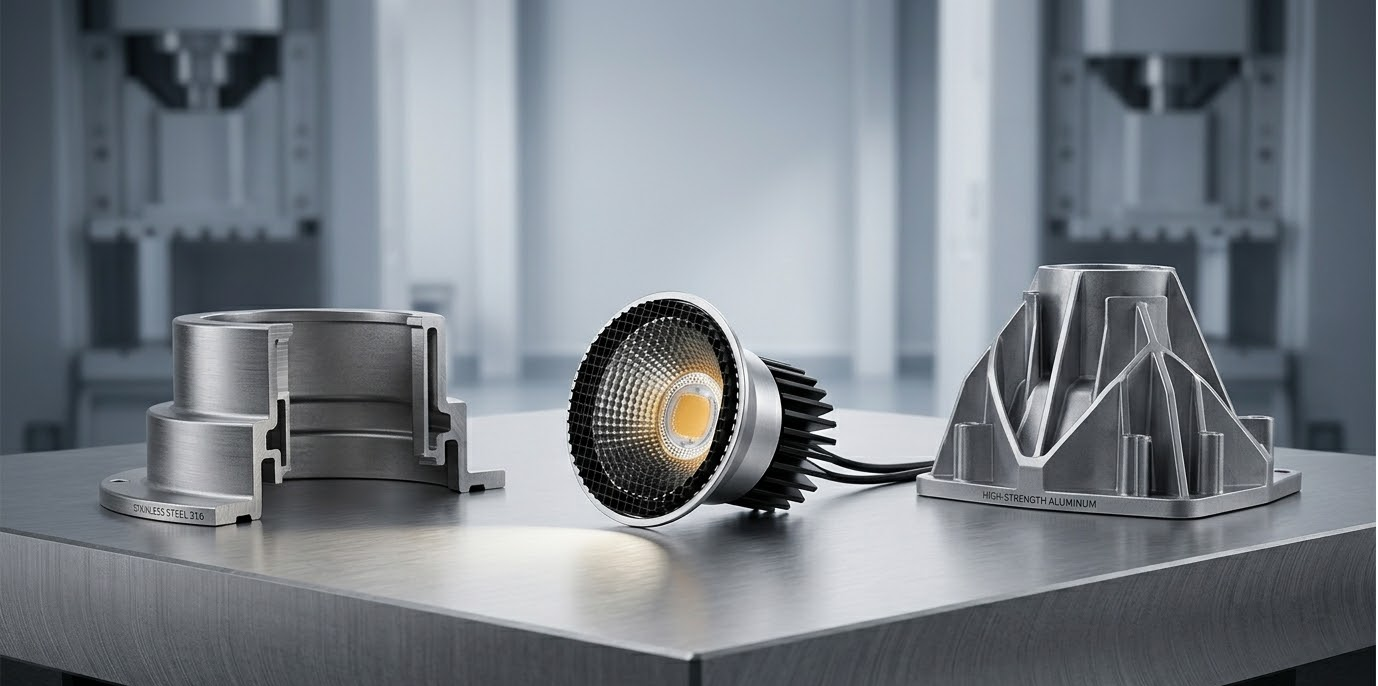
Constructed from a bespoke die-cast aluminum alloy, this 5W module is built around a high-performance thermal sink. By rapidly pulling heat away from the core, it prevents the thermal runaway that degrades cheaper modules. This ensures the color stays consistent and the brightness remains at factory levels for the life of the installation, protecting both the designer’s intent and the client’s capital investment.
2. Optical Versatility for Bespoke Interiors

Great design requires choice. The Anova module offers a suite of interchangeable optics:
Multiple Beam Angles: 15°, 24°, 36°, and 60° options allow for everything from sharp art-gallery accenting to broad atmospheric washes.
True Color Fidelity: With a CRI >90, it reveals the authentic textures of high-end materials like natural marble and rare wood veneers.
IP65 Protection: The availability of a moisture-sealed variant means contractors can maintain a unified aesthetic across both dry living areas and high-humidity spa zones.
The Global Partnership: The Anova Legacy
Since starting our operations in 2003 in the industrial heart of Foshan, Anova has grown into a cornerstone of the global LED market. Our two decades of experience aren’t just about manufacturing; they’re about navigating the complex technical and regulatory shifts of an evolving industry.
1. Intellectual Property as a Safety Net
We believe in engineering our own solutions. With a portfolio of over 50 patents, Anova provides its global partners with a unique level of market protection. This IP-driven approach shields our distributors from the commoditization of “copycat” products and ensures that every project they supply is backed by original, legally defended technology.
2. Sustainability and the Digital Supply Chain
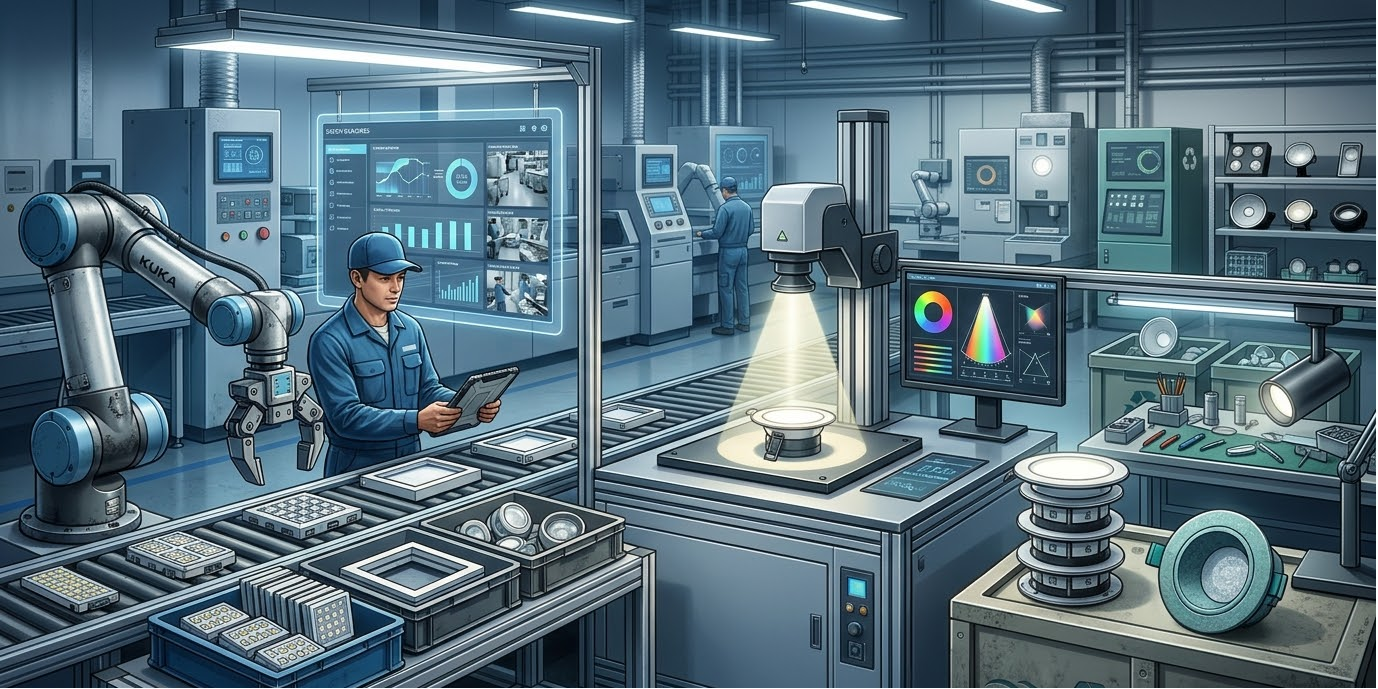
In 2023, we upgraded our manufacturing capability with a new facility that integrates digital monitoring for every stage of production. Beyond efficiency, we are pioneering the use of eco-friendly materials, such as our “Recycled Ocean Plastic” series, providing our partners with the ESG credentials they need to win contracts in an increasingly environmentally-aware luxury market.
3. Comprehensive ODM Support
For the brand owner and professional importer, Anova acts as an invisible engineering arm. Whether it’s 3D prototyping, IES file generation, or bespoke packaging design, our ISO9001:2015 certified workflow ensures that every module leaving our floor meets the highest global standards of excellence.
Looking Ahead: HCL and the Integrated Home
The transition to 24V DC is the necessary precursor to the rise of Human-Centric Lighting (HCL). Managing circadian-rhythm-friendly “Tunable White” systems is vastly more stable on a DC backbone. Furthermore, as homes increasingly incorporate solar arrays and battery storage, 24V DC lighting systems can plug directly into these renewable loops, creating a more efficient, self-sustaining energy profile for the future-proof residence.
Conclusion: Engineering Peace of Mind
At its core, the move to 24V DC is about more than just electricity; it’s about de-risking the architectural process. By moving away from the liabilities of high-voltage AC and embracing the stability of low-voltage DC, lighting professionals can deliver results that are safer, easier to maintain, and visually superior.
For international importers, technical contractors, and designers, an alliance with Anova is an investment in 20 years of proven reliability. As we continue to refine the science of light, our focus remains on providing the global market with solutions that aren’t just smarter and safer, but fundamentally more profitable for our partners.
Consult with Our Technical Team
Ready to audit your next project for the benefits of 24V DC? Contact the Anova consulting group today for a full technical breakdown, a customized project quote, or to arrange for high-performance samples. Let us help you build a lighting ecosystem that stands the test of time.
FAQs
Q: Why stop at 24V? Is it really that much better than 12V?
A: Absolutely. 24V is the “sweet spot” for professional installs. It allows for significantly longer cable runs without the debilitating voltage drop that plagues 12V systems, meaning you don’t have to over-engineer your cabling to get consistent light levels.
Q: Is the IP65 rating really necessary for indoor projects?
A: In luxury homes, “wet zones” like steam showers or covered patios are common. Having an IP65 variant of the same module ensures you can maintain a consistent visual look throughout the property while meeting safety codes in every room.
Q: What does CRI >90 mean for my client? A: It means the light won’t “wash out” the colors of their home. In high-end interiors, where the materials themselves are an investment, high CRI is essential to making sure everything looks as expensive as it actually was.